Solar Works Pakistan website
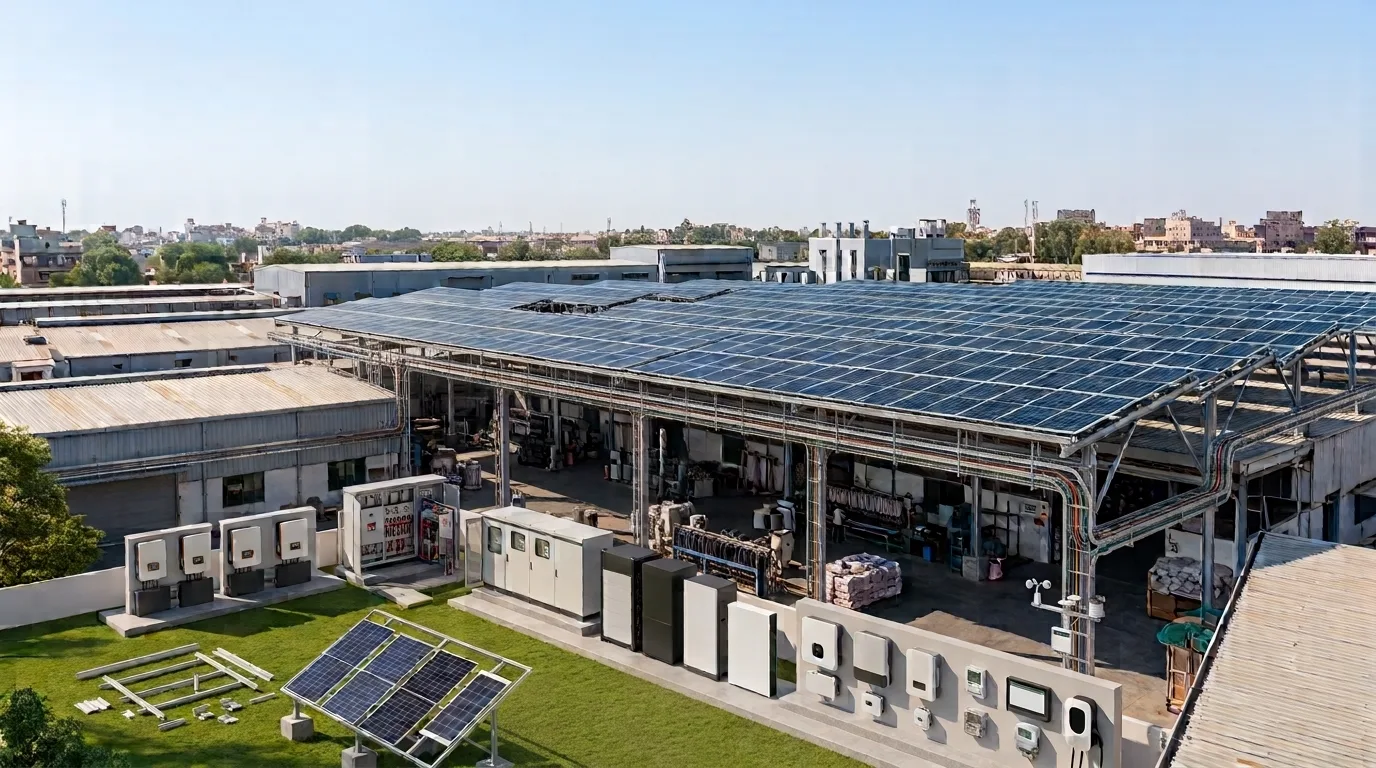
Rooftop solar array powering a Solar Works Pakistan inverter, battery cabinets and factory floor

Solar company in Faisalabad and Lahore, installing across Punjab

Solar Works Pakistan started in Faisalabad in 2022, and we now have an office in Lahore too. One team looks after your system, from the first site survey through to after-sales service. We use tier-1 panels and genuine inverters. If anything needs attention after installation, you call us and we sort it out, including warranty claims.

{{ whoHero.alt }}

{{ whoHero.title }}

{{ whoHero.tag }}

{{ whoHero.text }}

Across Punjab

Not sure what size system you need? Let's work it out together.

We'll look at your usage and your roof, then recommend a system that fits both. More than 300 customers in Faisalabad, Lahore and across Punjab run on systems we built.

Message us on WhatsApp
Solar calculator

What size system do you need?

Enter your summer bill, set what you run, and tell us when your ACs run. The estimate updates as you go.

units / month, from any month June to August on your LESCO / FESCO bill
2. What do you run?
3. When do your ACs run?Most homes run ACs at night. Panels only work in daylight, so night AC runs on the battery and needs more battery and more panels to charge it.
Recommended: hybrid system
{{ c3.r.kw }} kW{{ c3.r.panels }} × 715 W panels
Hybrid inverter{{ c3.r.inv }}
LiFePO₄ battery{{ c3.r.batt }}
Roof space{{ c3.r.roof }}
Approx. cost{{ c3.r.price }}
Saves about{{ c3.r.hySave }} / month
On-grid net billing would save{{ c3.r.ogSave }} / month
Pays for itself in{{ c3.r.payback }}
Net billing pays very little for the units you export, so storing your solar in a battery earns you more. At this size we'd plan it as a commercial project. Message us and an engineer will size it.
Units your system makes each month About {{ c3.r.yearly }} a year · you use about {{ c3.r.usage }}
Send this estimate on WhatsApp

Estimate only. We confirm the final size on a free site survey.

Which system fits?

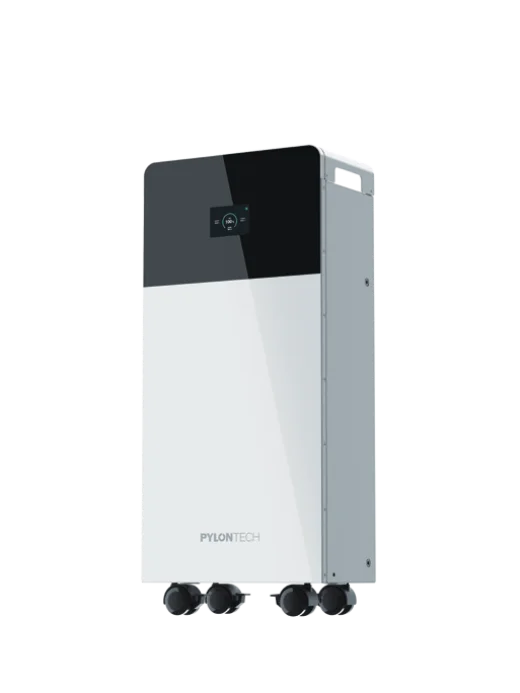
Pylontech Fidus LiFePO₄ battery
Hybrid {{ ways_hyTagText }}

Energy independence that pays for itself

Panels, a hybrid inverter and a lithium iron phosphate (LiFePO₄) battery working as one system. Solar runs your home by day and charges the battery; the battery carries you through the evening and through load-shedding. You rely far less on the grid, so the bill drops and the lights stay on.

10 years manufacturer's warranty on new batteries
8,000–10,000 rated life cycles
Works during load-sheddingYes
BatteryLiFePO₄
Exports surplus to gridYes
Best forHomes with load-shedding
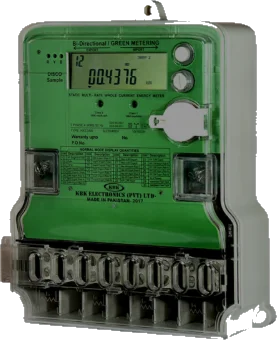
Bi-directional green net meter
On-grid {{ ways_ogTagText }}

Grid Dependent

Panels and an on-grid inverter run your load in daylight, with the grid covering the rest. There is no battery, so the system switches off during an outage. Surplus units go back to the grid and are credited on your bill:

Net metering: units you export are offset against units you import, so you pay only for the difference.

Net billing: exported units are credited at the export rate, and imported units are billed at the normal tariff.

Works during load-sheddingNo
BatteryNone
Exports surplus to gridYes
Best forHomes with a stable grid
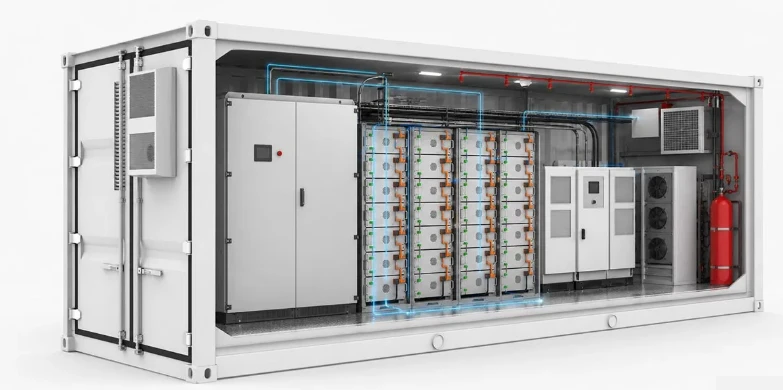
Containerised battery energy storage system
BESS {{ ways_bsTagText }}

Storage for industrial & commercial use

Battery energy storage for factories, warehouses, hospitals and commercial buildings. Sized against your load profile to keep production running through outages, shave peak-demand charges and store solar for use when you need it.

60 kWh to gigawatt scale Every project is planned around your site, so the move from grid supply to energy independence is seamless.
Works during load-sheddingYes
BatteryCommercial-scale
Exports surplus to gridCase by case
Best forFactories and C&I sites

Still not sure? Send us your electricity bill.

We'll read your usage and recommend the right system with a free quote.

WhatsApp your bill

Recent installations

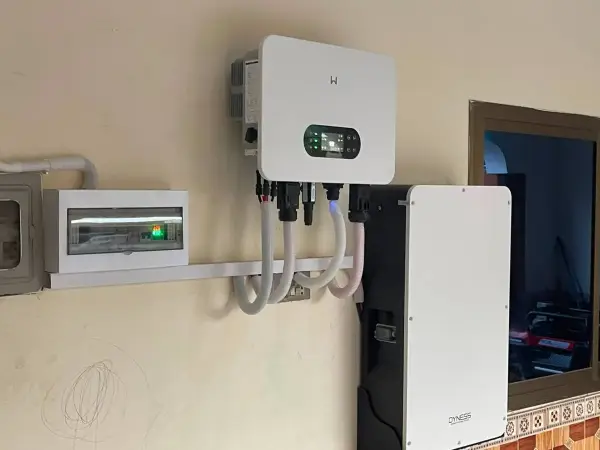
Jobs finished across Lahore, Faisalabad and the districts around them. Photographed as we left them.
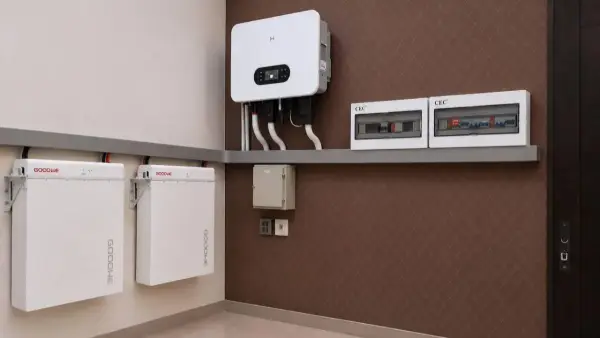
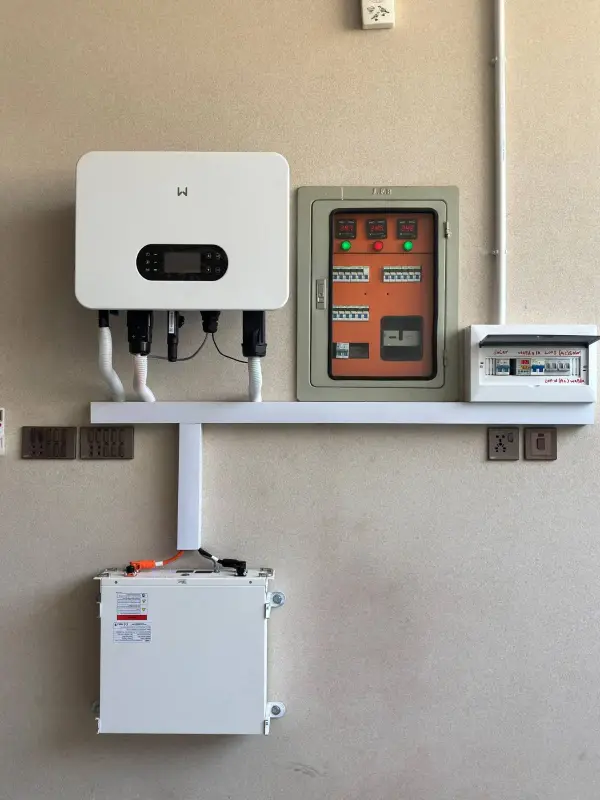
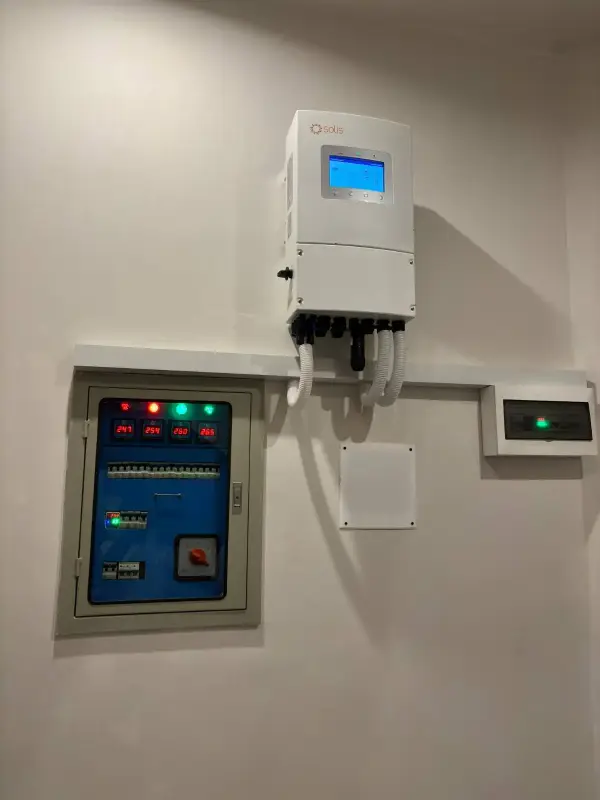
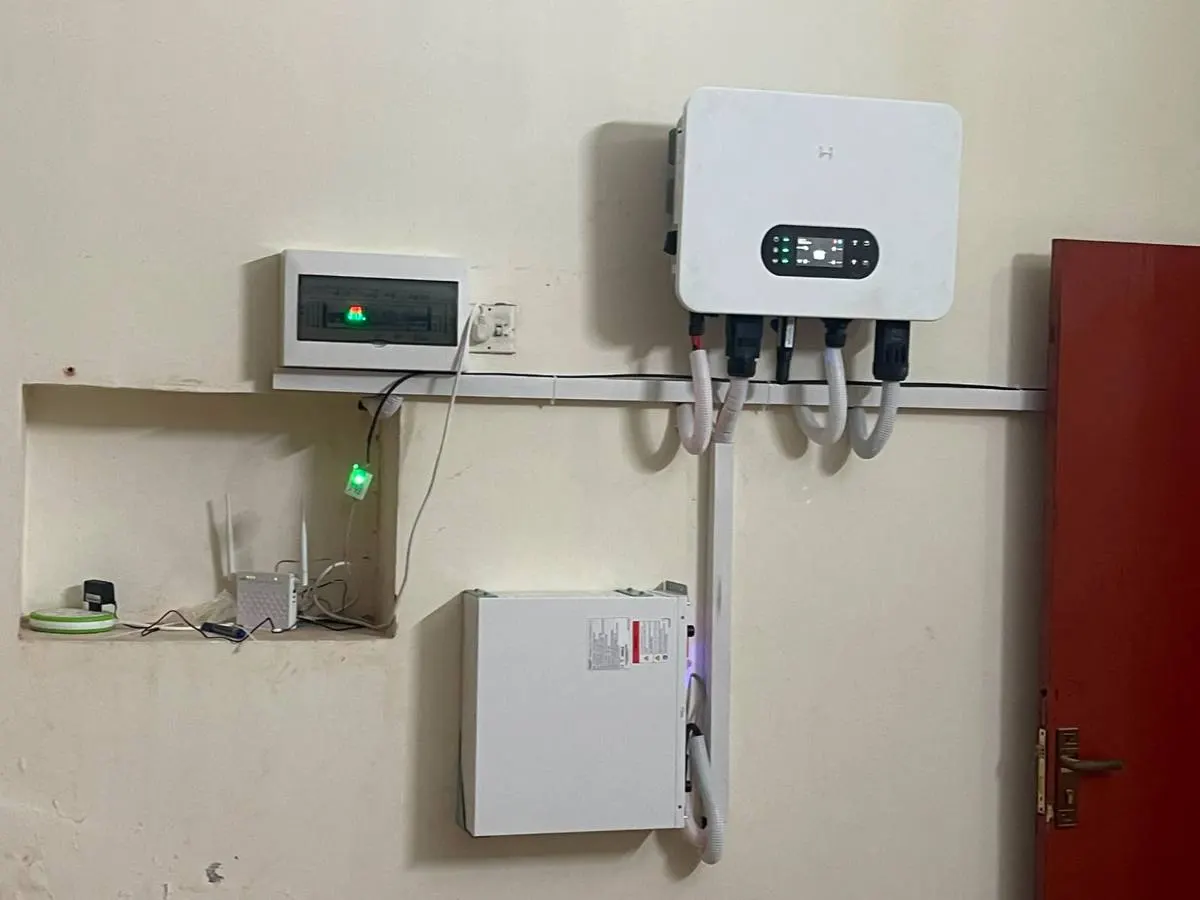
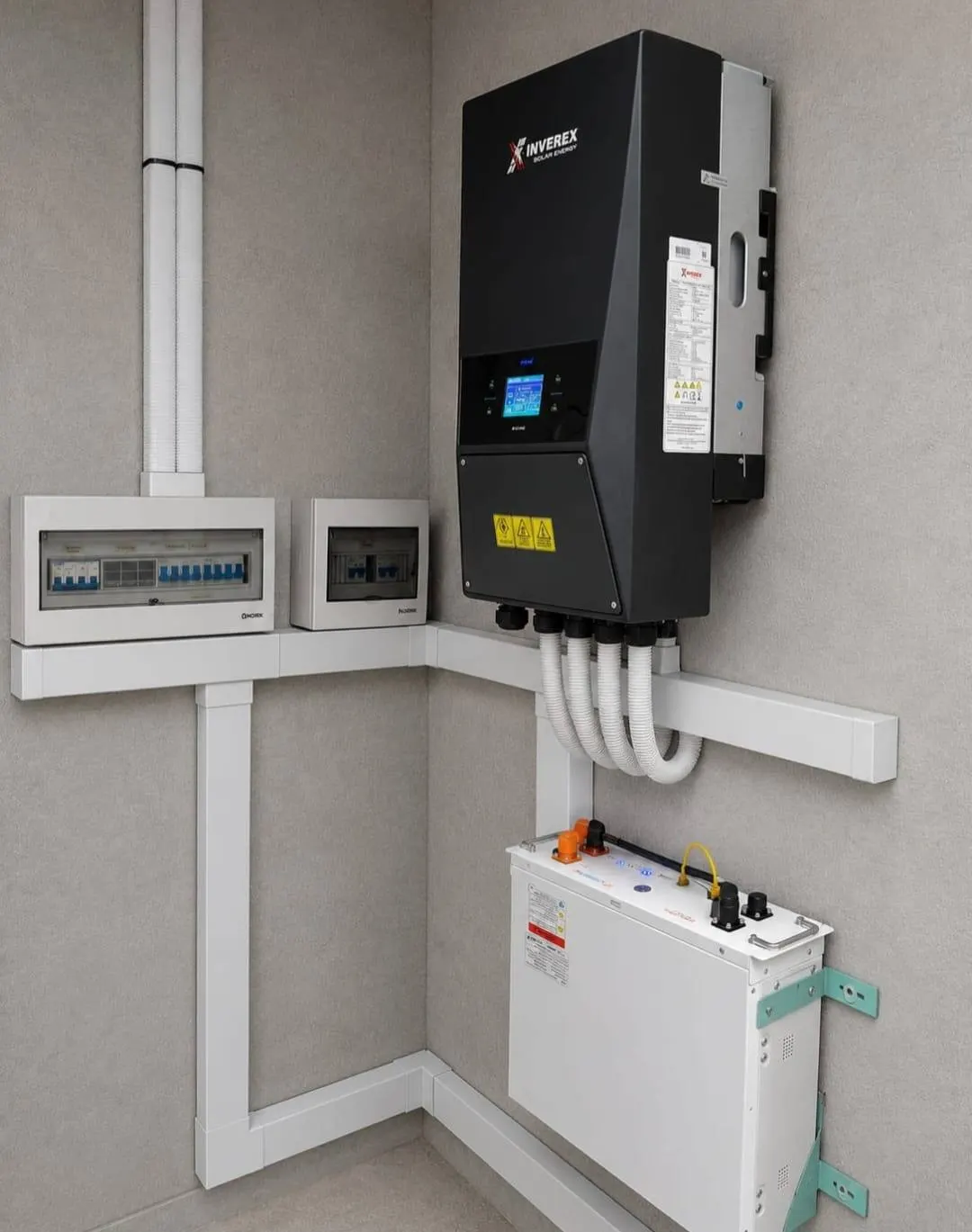
Wall mounted hybrid inverter with two lithium batteries and twin protection boards in a home
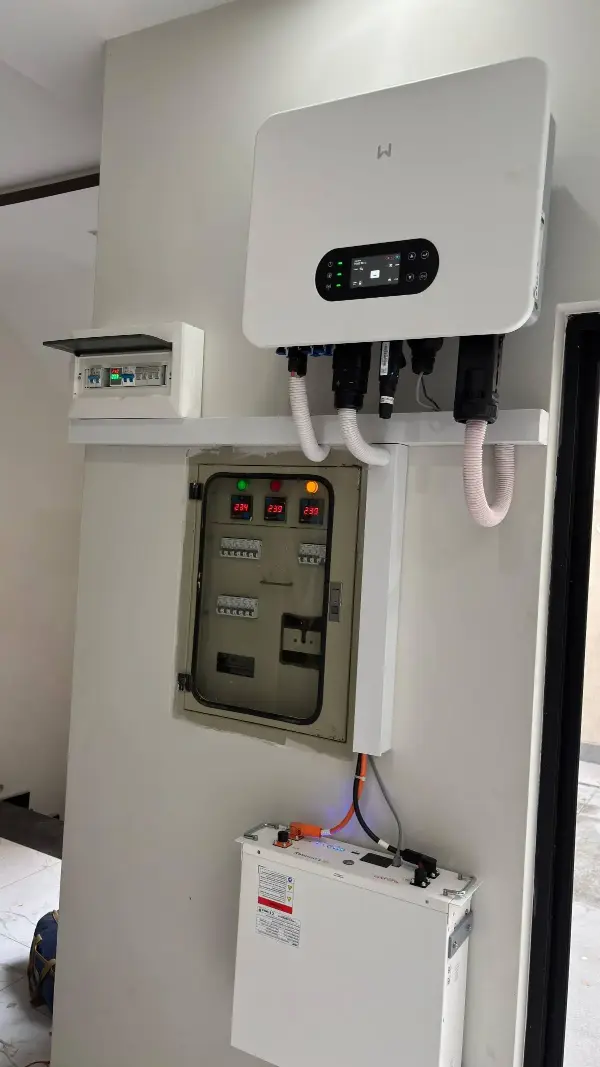
Hybrid inverter beside a tall lithium battery cabinet and an isolator in a house
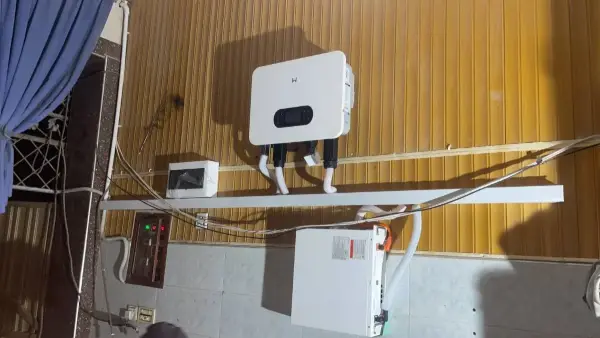
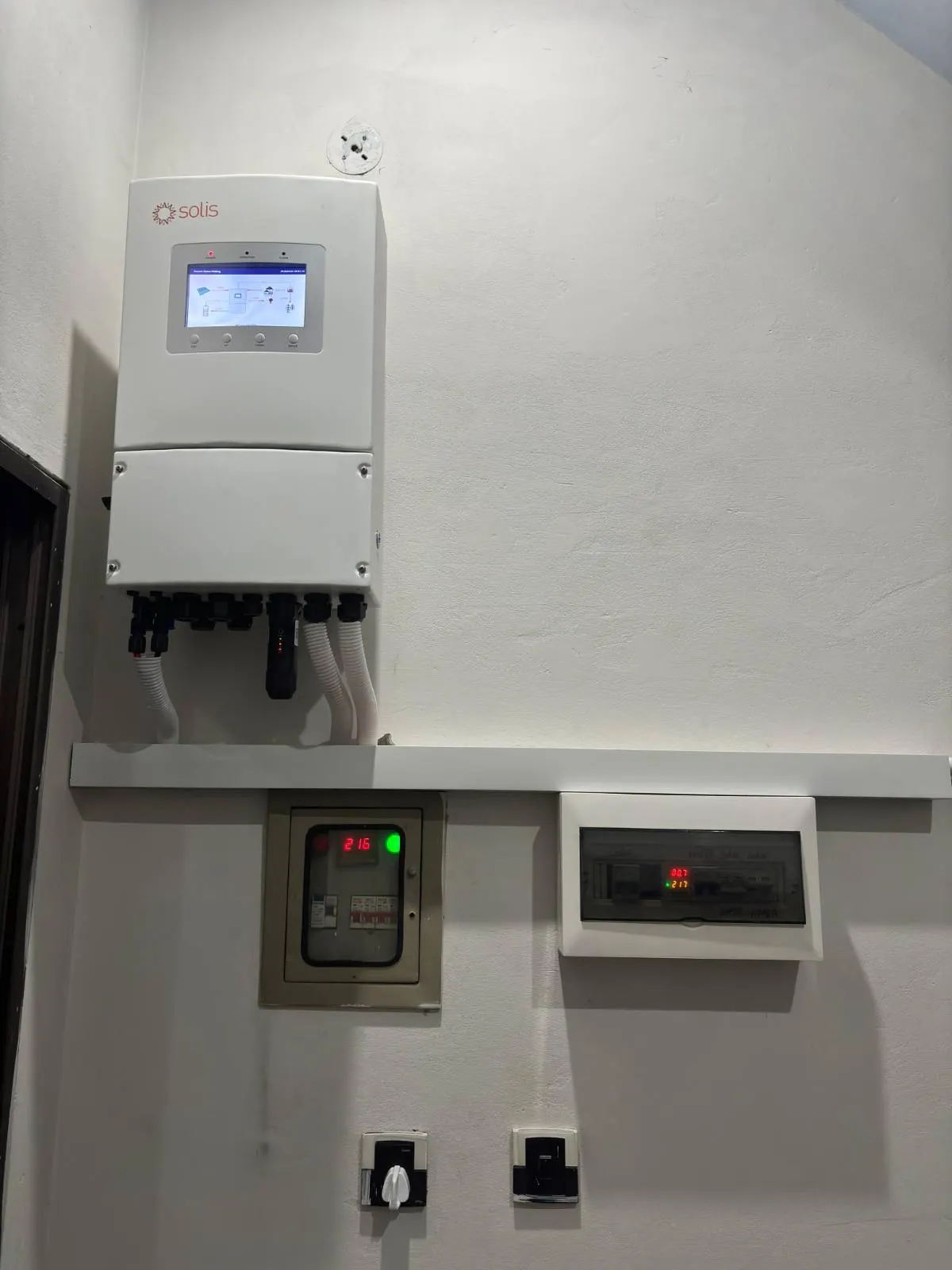
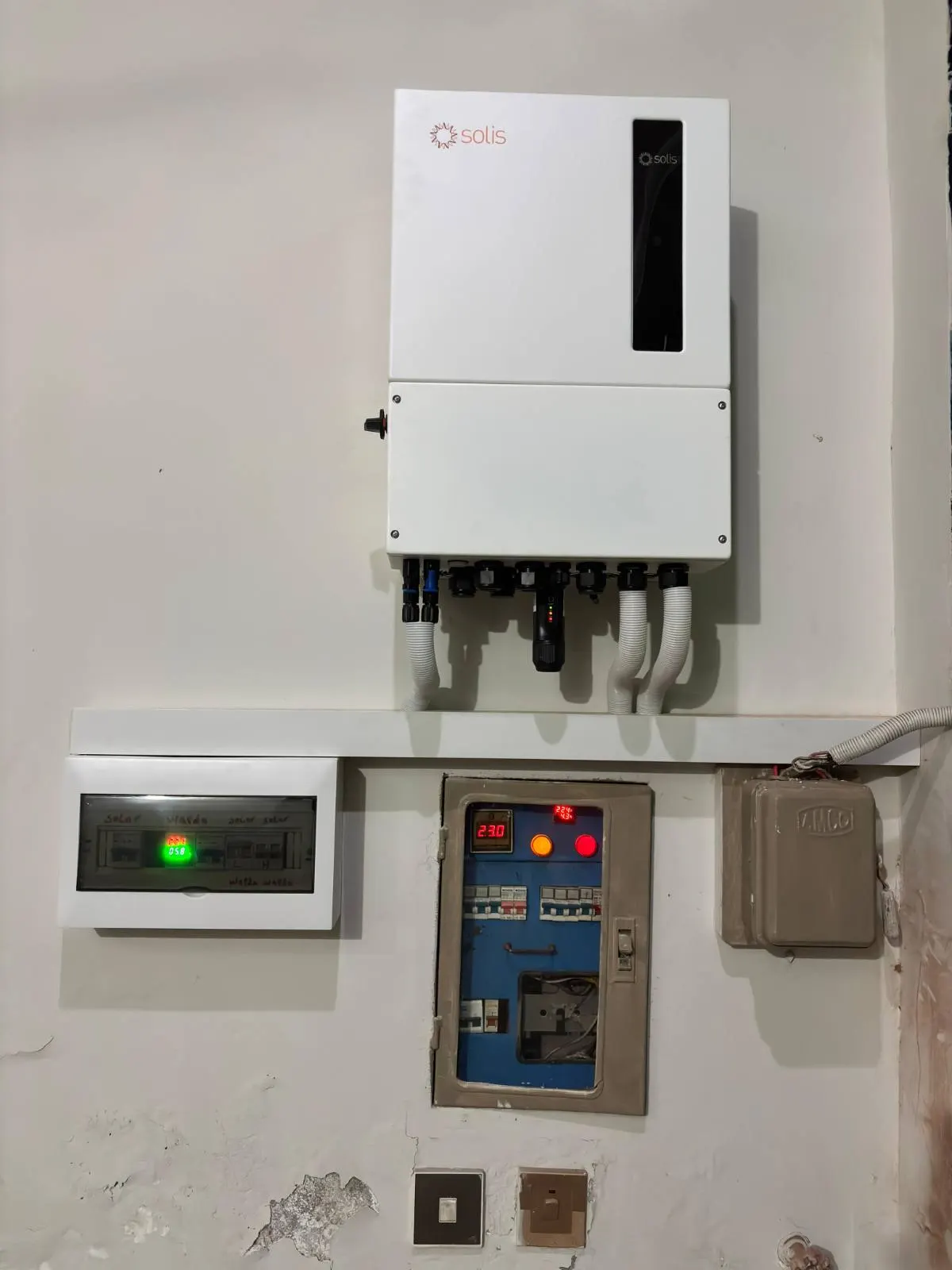
Hybrid inverter on a shelf above an enclosed protection box
Inverter and conduit run along a wooden ceiling above a long cable tray
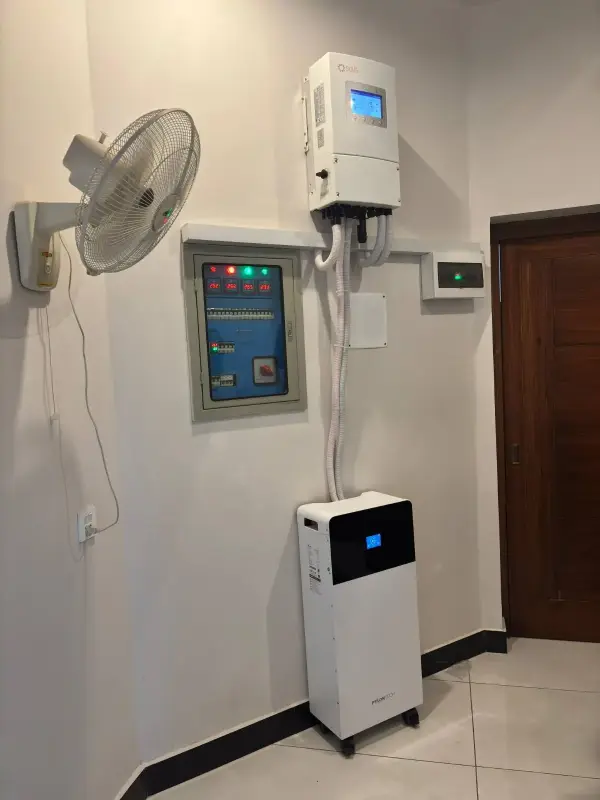
Hybrid inverter with a floor standing lithium battery and a metered distribution panel
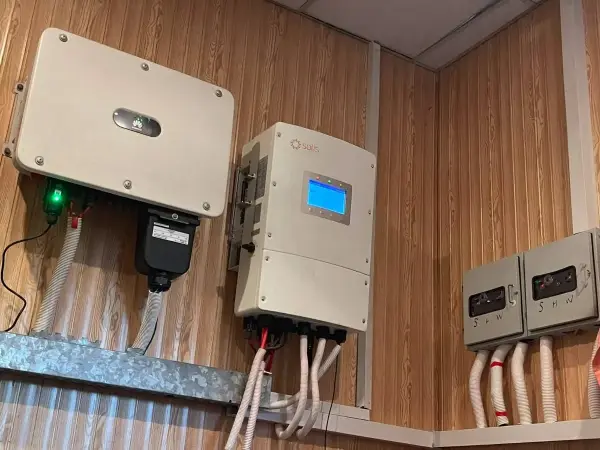
Two inverters side by side above a row of switchgear on a panelled wall
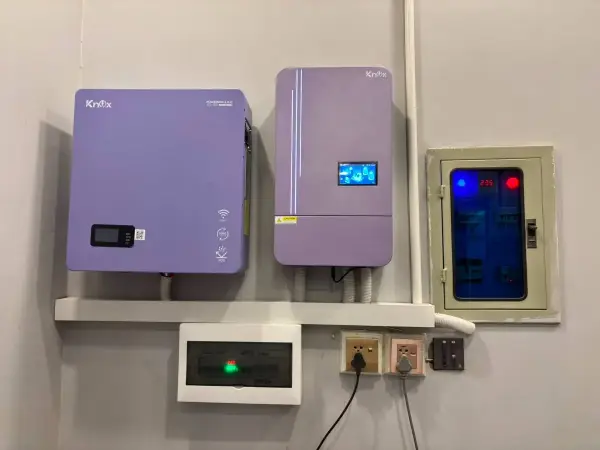
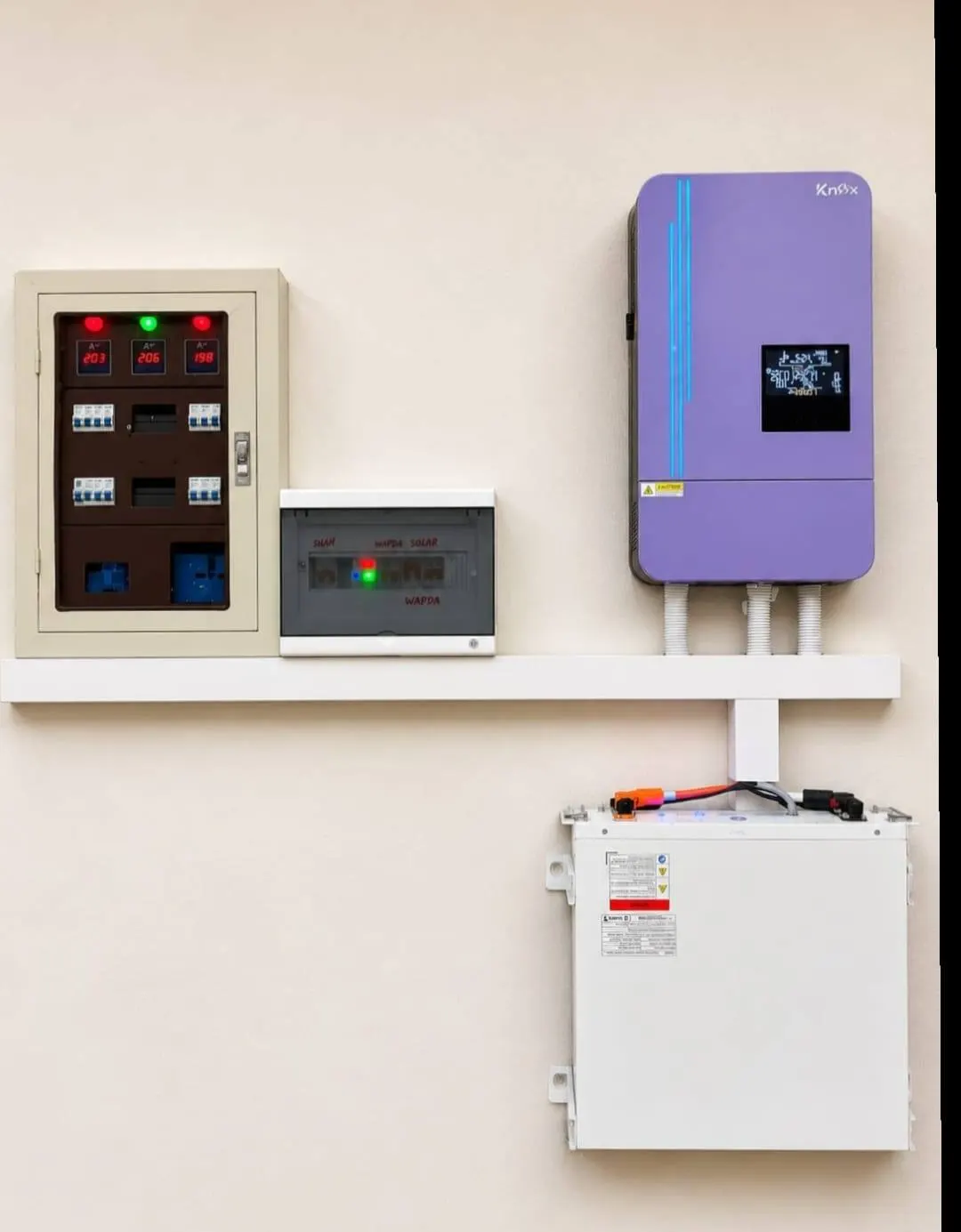
Two purple cased inverters with a protection board on a shelved wall
Hybrid inverter with a wall meter and a compact protection box
Hybrid inverter above an open protection board and a lithium battery
Hybrid inverter with conduit dropping to a meter and switch below
Hybrid inverter on a shelf with a meter and a red protection board below
Inverter, meter and protection enclosure spread along a workshop wall
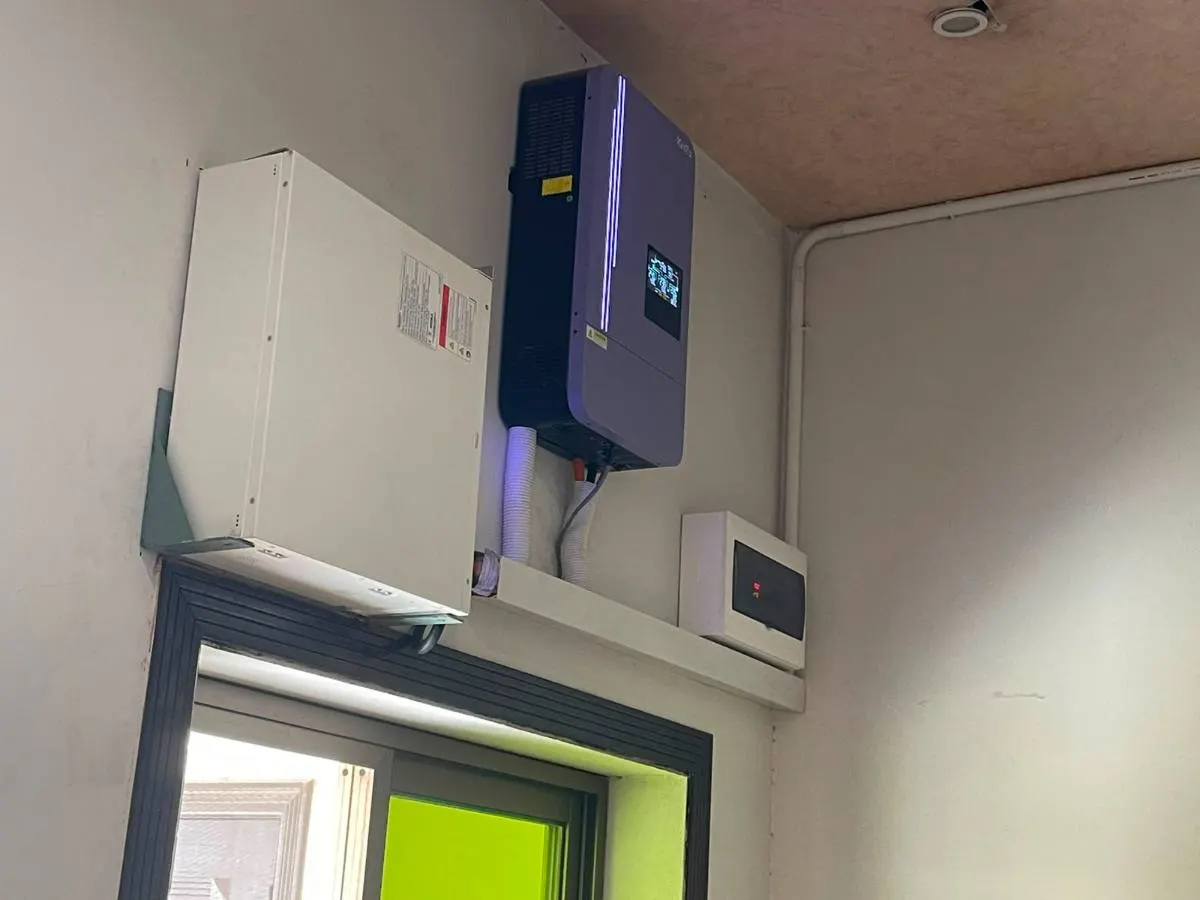
Inverter and battery mounted high above a commercial doorway
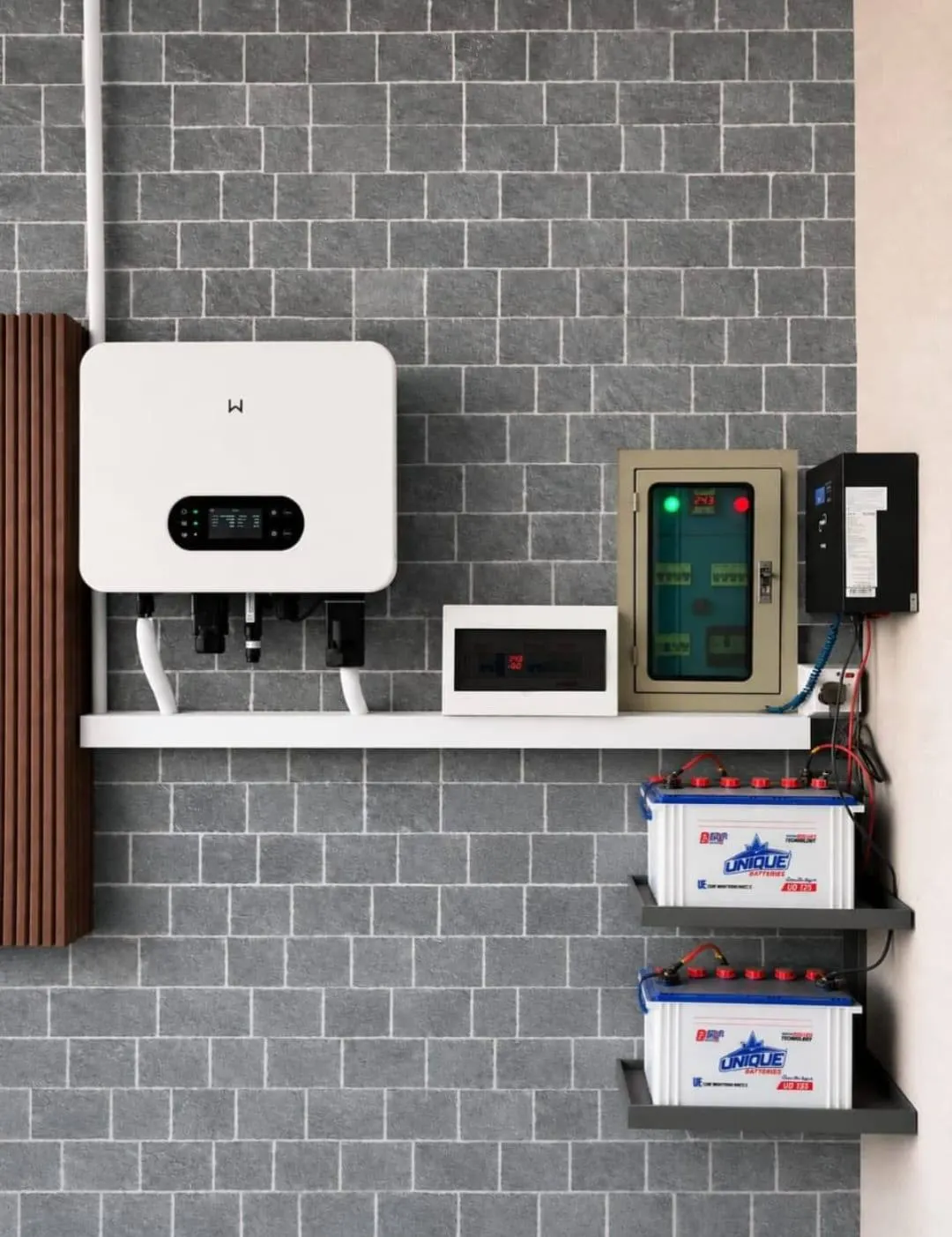
Hybrid inverter with two small lithium batteries on a tiled wall
Hybrid inverter above a tall floor standing lithium battery
Purple cased inverter with a protection board and a wall lithium battery
Commercial inverter with conduit to a metered panel and a battery rack
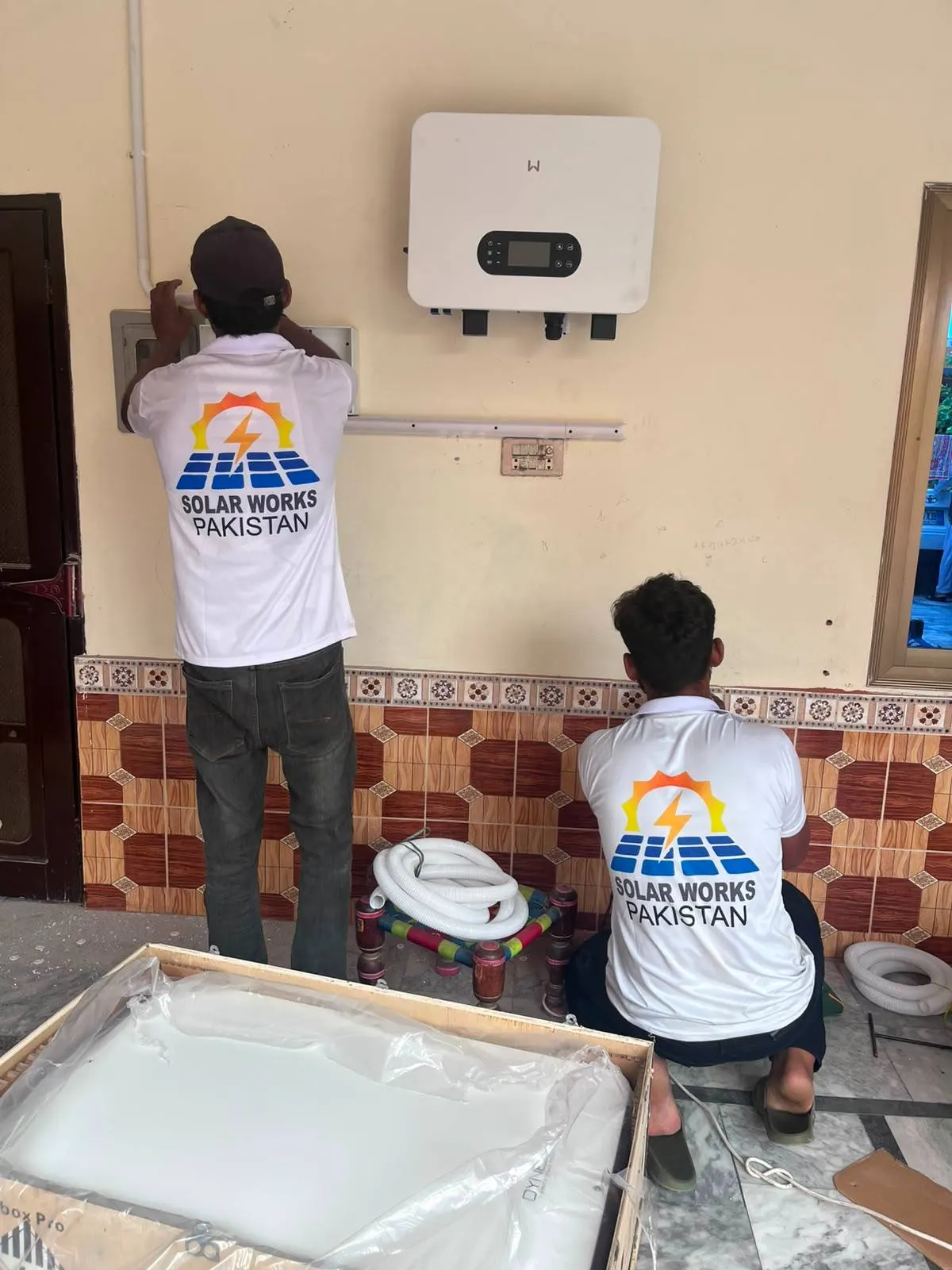
Two Solar Works Pakistan technicians in branded shirts installing an inverter
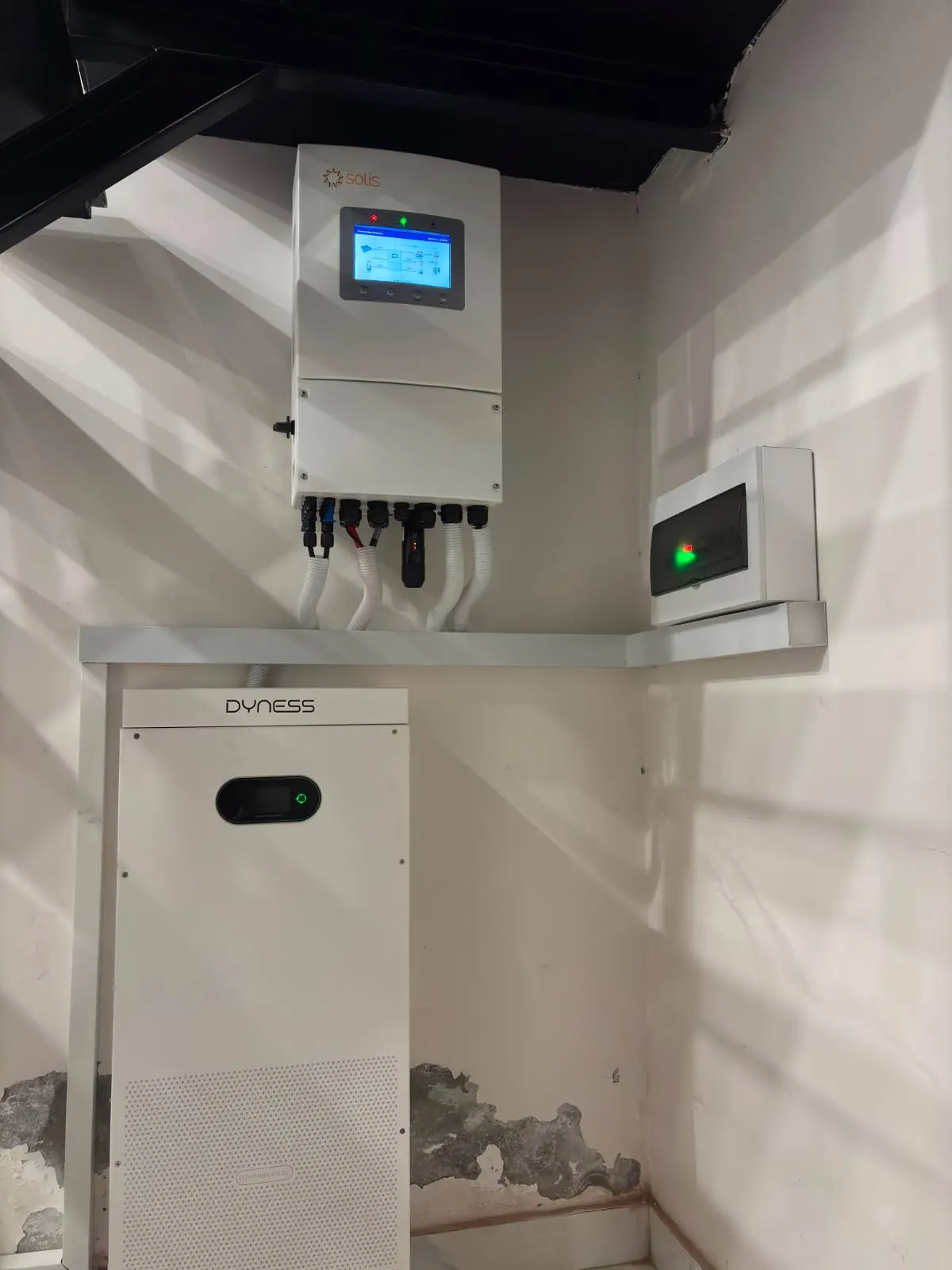
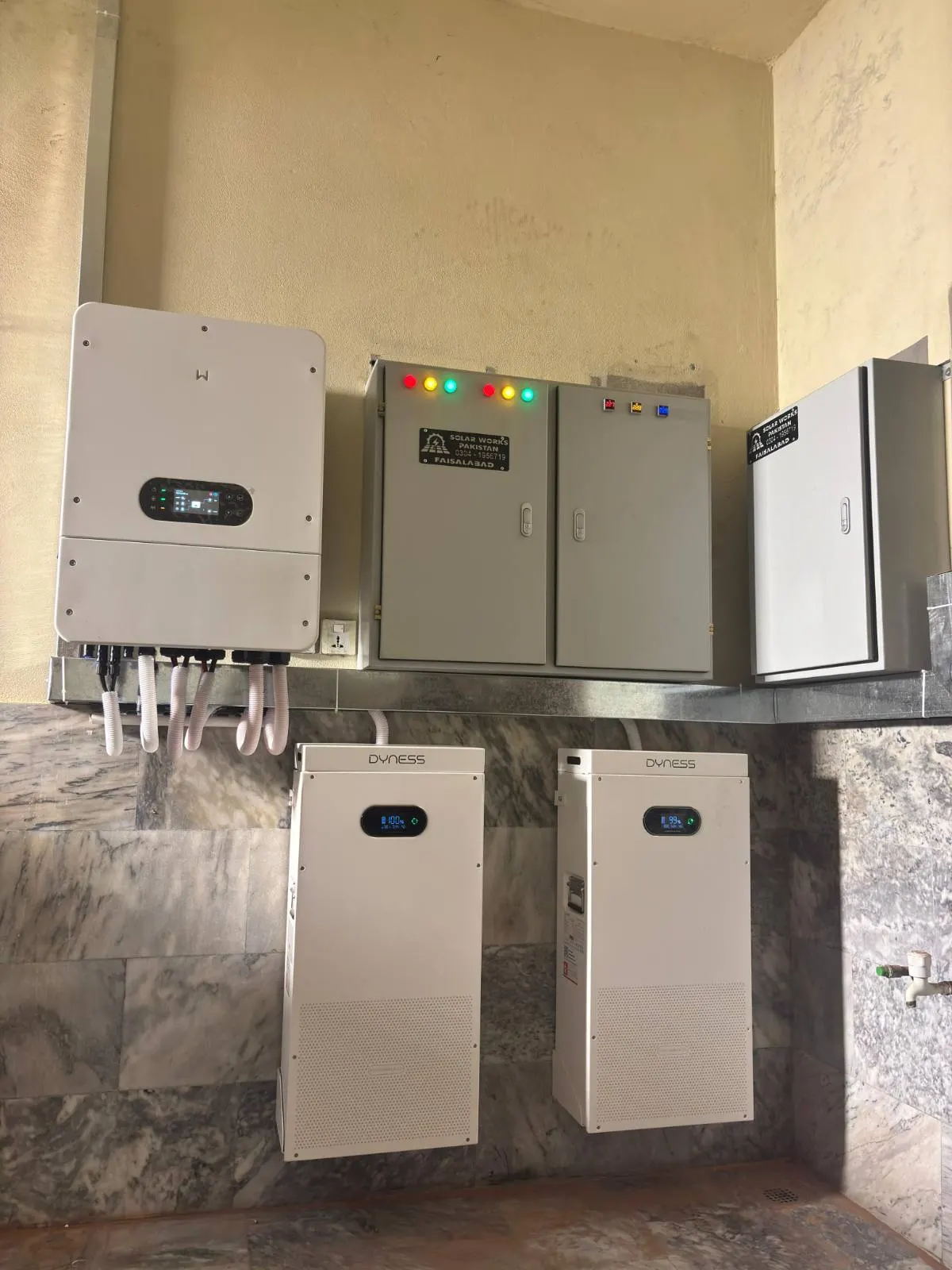
Hybrid inverter, two Dyness batteries and Solar Works Pakistan branded distribution boards in Faisalabad
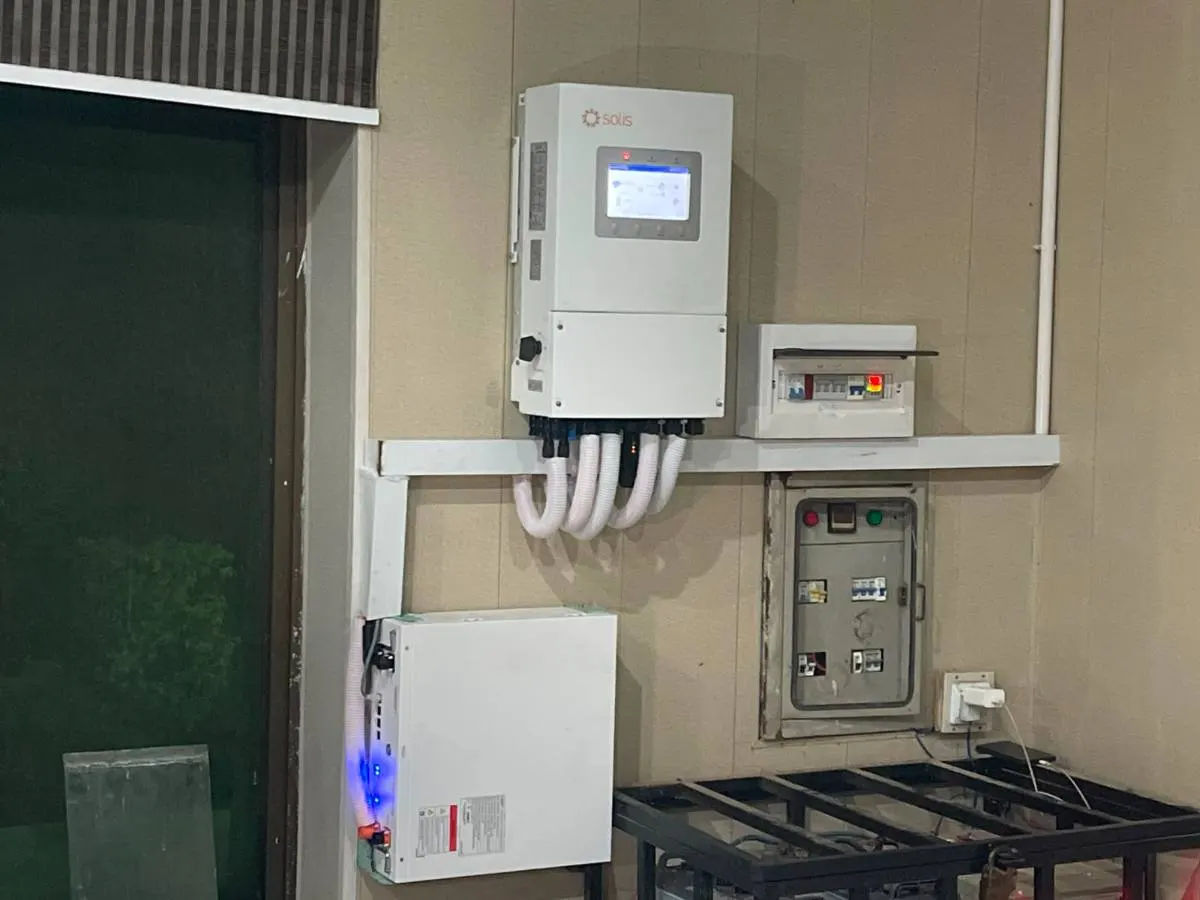
Hybrid inverter with a lithium battery and a long conduit run in a corner

How a project runs
Before any work starts
2–3 days on site
For the life of the system
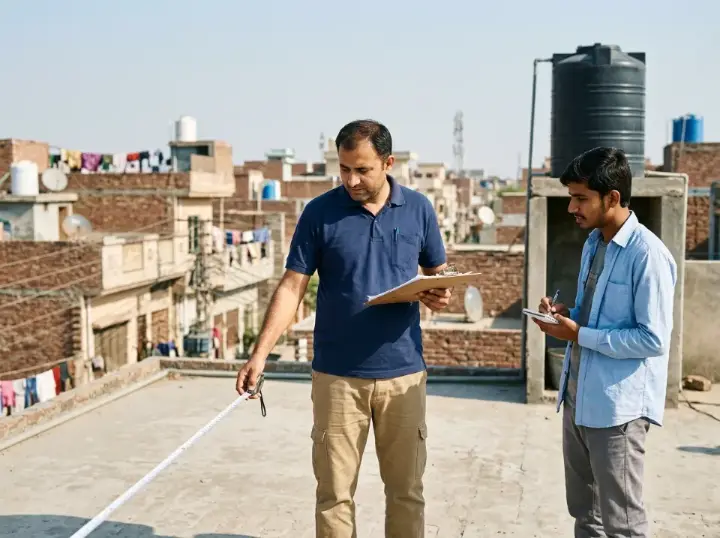
Two Solar Works engineers measuring a flat rooftop with a tape and clipboard
Step 1· Before work

Site survey

We visit, measure the roof, check your bills and note your load. Shading, wiring and meter position all get recorded.

Design engineer reviewing a rooftop panel layout on screen with the equipment list
Step 2· Before work

System design

You get a layout, an equipment list and an honest estimate of what the system will generate month by month.
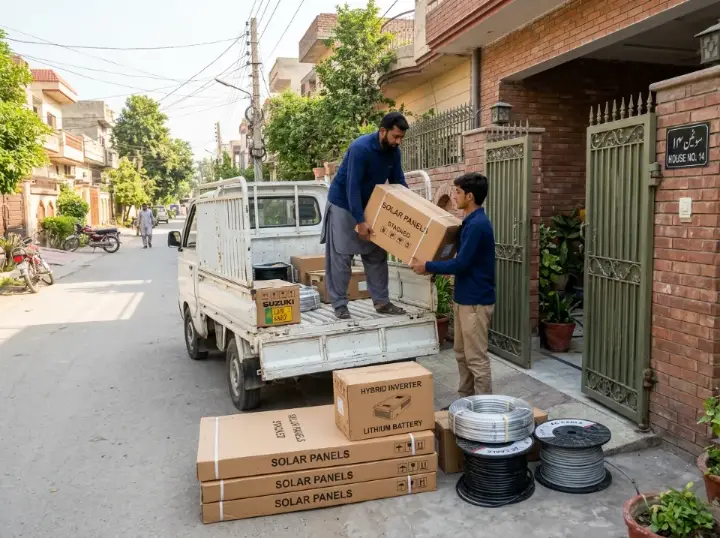
Boxed panels, inverter, battery and cable reels being unloaded at a house gate
Step 3· Before work

Supply

Panels, inverter, battery, structure and protection gear arrive together so the install is not held up.
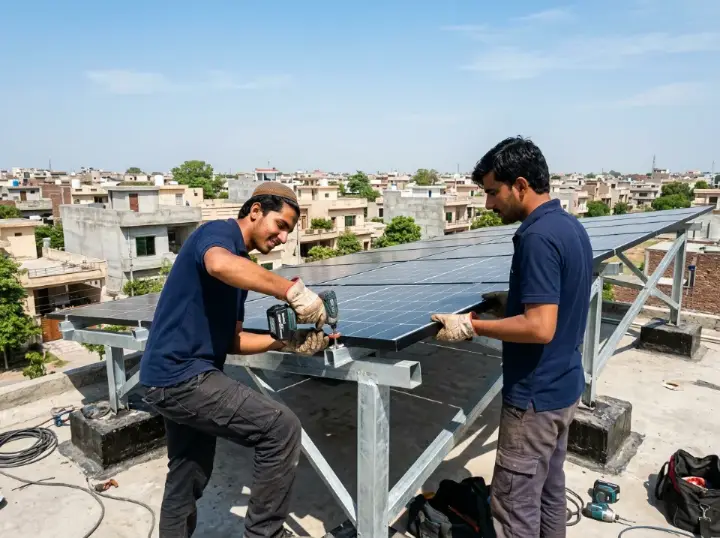
Two installers fixing panels onto an elevated steel structure on a rooftop
Step 4· On site

Installation

Structure, wiring, boards and commissioning by our own team. Most home systems are finished in two to three days.

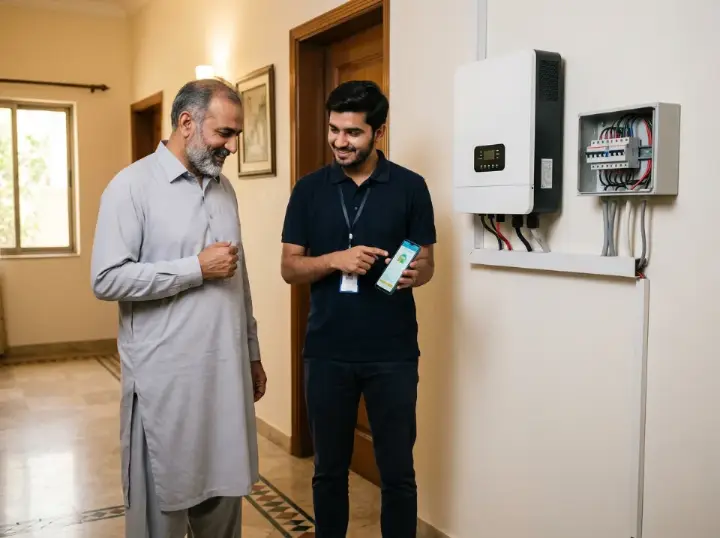
Technician showing a homeowner the monitoring app beside the installed inverter
Step 5· After

Monitoring and support

App set up, readings explained, and a number to call when something looks wrong.

Get a number you can trust

Send us your last electricity bill and we will tell you what solar will do for it.

Message the bill and your city on WhatsApp. We reply with a system size, an equipment list and a price range before anyone visits.

WhatsApp 0336 6664321

Shop Now

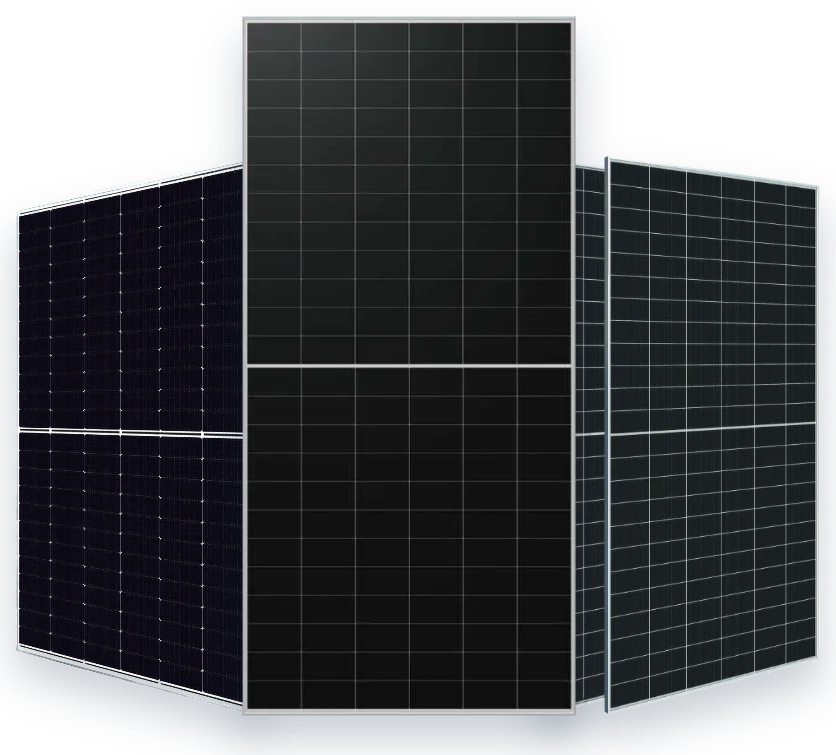
Genuine stock from the brands we install ourselves.
Shop Now

{{ t.icon }}
{{ t.title }}{{ t.note }}

Browse Categories

{{ c.alt }}
{{ c.label }}{{ c.sub }}
arrow_forward
{{ resultLabel }}
{{ p.imageEl }} Product photo

{{ p.name }}

{{ p.metaLine }} {{ p.priceLine }} {{ p.availLine }}
Download datasheet (PDF)

Nothing matches those filters

Try a different category, clear the filters, or search by brand or model.

BESS & Customized Solar Installations

Site visit and technical study required before quotation.

Shop Solar Products in Faisalabad, Lahore & Across Pakistan

Shop quality A-grade solar materials at competitive rates from Solar Works Pakistan. From solar panels, inverters and batteries to breakers, mounting stands, wiring, nuts and bolts, find the materials you need for your next installation, repair or upgrade.

Read moreShow less

We supply solar installers, system owners, homeowners and businesses in Faisalabad, Lahore and throughout Punjab, with delivery across Pakistan. Whether you need a single replacement component or materials for a complete solar project, explore our product categories and send us your requirements.

All Your Solar Materials in One Place

Solar Panels

Explore A-grade solar panels for residential, commercial and industrial projects. Whether you are planning a new installation or expanding an existing system, choose panels that match your project specifications and budget.

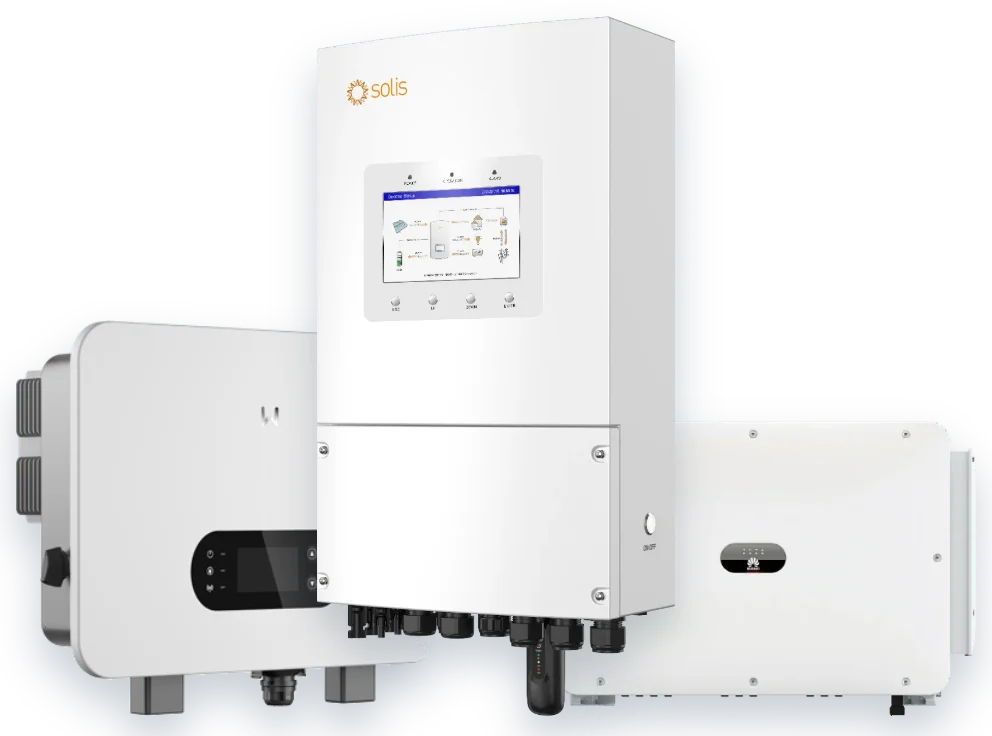
Solar Inverters

Browse solar inverters for on-grid and hybrid systems. Find options for homes, shops, offices and factories, with product selection based on your system design, power requirements and battery compatibility.

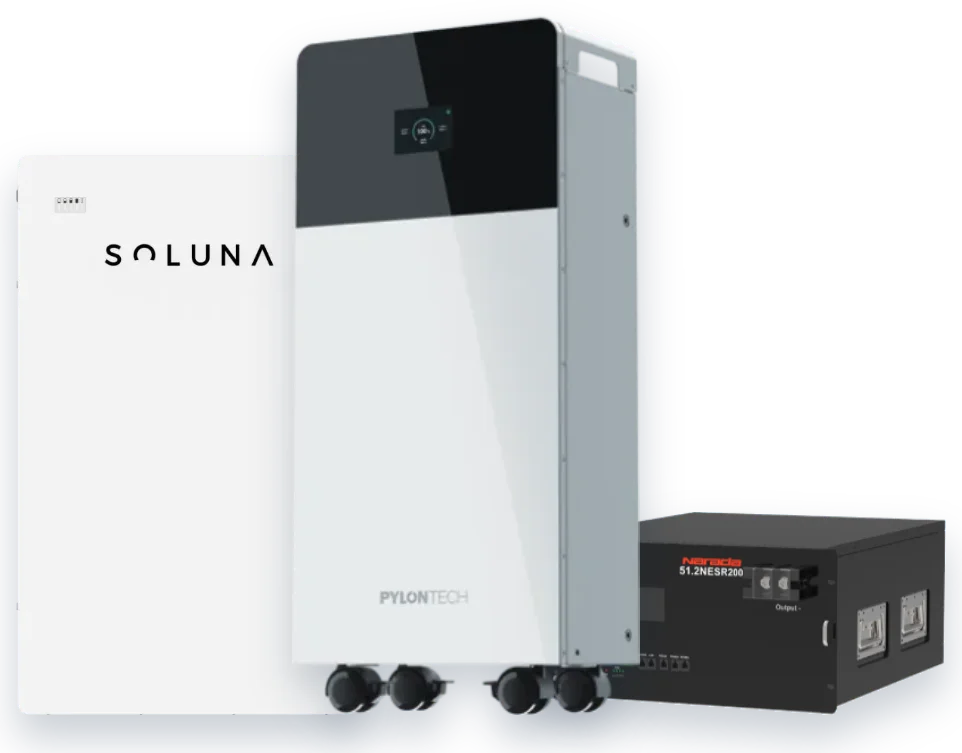
Batteries & BESS

Explore solar batteries and battery energy storage systems (BESS) for backup and energy storage requirements. From household backup to commercial and industrial applications, source storage equipment suited to your installation.

Breakers, Wiring & Electrical Accessories

Complete your electrical materials list with AC and DC breakers, fuses, distribution boxes, solar cables, AC wiring, connectors, cable lugs, terminals and earthing accessories. We supply the smaller components alongside the main equipment, making it easier to source materials for installation and maintenance.

Solar Panel Stands & Mounting Hardware

Shop solar panel stands, mounting structures, rails, clamps, brackets, fasteners, nuts and bolts. From the main support structure to the hardware that secures each panel, find mounting materials for your project requirements.

Monitoring & Zero Export Equipment

Browse monitoring accessories and zero export equipment for compatible solar systems. Select the components specified for your inverter and system design.

Solar Material Supplier in Faisalabad, Lahore & Punjab

Solar Works Pakistan serves customers working on home rooftops, commercial buildings and industrial solar projects across Punjab. If you are looking for solar panels in Faisalabad, solar accessories in Lahore or a supplier for your complete project materials list, our shop brings the main product categories together in one place.

Installers can source equipment for new projects and maintenance work, while system owners can find components for replacements and upgrades.

Quality Materials at Competitive Rates

Our focus is straightforward: A-grade solar materials, competitive rates and a complete range of installation supplies. Quality matters throughout a solar installation—from the panels and inverter to the wiring, breakers and mounting hardware.

Send us your required brands, models, specifications and quantities for a quotation. Whether your list includes major equipment or everyday installation essentials, we can help you source the materials your project needs.

Delivery Across Pakistan

Our supply service extends beyond Faisalabad, Lahore and Punjab. We deliver solar products across Pakistan, helping installers and system owners source materials wherever their projects are located. Contact us to confirm product availability, current rates and delivery arrangements for your order.

Shop now with Solar Works Pakistan—quality solar materials, from panels to nuts and bolts, delivered across Pakistan.

Complete Solar Systems & BESS

Customized residential, commercial and industrial systems. Quoted after assessment, never before.

{{ s.icon }}{{ s.label }}
Site visit→Technical study→Quotation
{{ detailUrl }}
{{ detailBrand }}

{{ detailName }}

{{ detailMeta }} {{ detailPrice }}
{{ qty }}
Pay by bank transfer or cash on delivery. Checkout opens once prices and delivery charges are confirmed.
Site visit and technical study required before quotation. No online checkout for this item.
Manufacturer datasheet {{ detailSheetFile }} {{ detailSheetMeta }}
Download datasheet (PDF)

Specifications

{{ r.k }}{{ r.v }}
Specifications, description and datasheet are published only from documentation you supply.

Product description

{{ detailSummary }}

Key features, as printed on the datasheet

{{ f.t }}

Full technical specifications

{{ g.title }}
{{ r.k }}{{ r.v }}
Notes from the datasheet
{{ n.t }}

Related products

{{ p.imageEl }} Product photo

{{ p.name }}

{{ p.metaLine }}
Services

From the first survey to the call five years later

We handle every stage of a solar project ourselves. Nothing is handed to a subcontractor you have never met.

Residential solar installation

Systems sized around your bill, your roof and the hours you need backup for.

Commercial solar installation

Shops, offices, schools, hospitals, restaurants and shopping malls, installed around working hours.

Industrial solar solutions

Factories, textile units, warehouses and workshops, including three phase and high load sites.

On-grid solar systems

Grid connected installations that cut the daytime bill, with net metering documentation support.

Hybrid solar systems

Solar with battery backup so the house or business keeps running after sunset and through outages.

Battery storage and BESS

Lithium iron phosphate batteries and larger storage systems for homes, businesses and industry.

Consultation and system design

Site surveys, load assessments and a system plan you can read without an engineering degree.

Solar equipment supply

Panels, inverters, batteries and electrical protection equipment, supplied with warranty paperwork.

Customized mounting structures

Rooftop and elevated structures designed and fabricated for the building they sit on.

Upgrades and battery integration

Adding panels, swapping an old inverter or putting a lithium battery on a system someone else installed.

System monitoring

Online monitoring set up for generation and consumption, with alerts when output drops.

After-sales support and maintenance

Fault diagnosis, troubleshooting, repairs, panel cleaning advice and ongoing technical support.

Coverage

Serving customers across Punjab, from our offices in Faisalabad and Lahore.

If your site is outside the two cities, message us the location. We travel for installations and we say no when the distance would make support unreliable.

Gallery

Real installations, photographed as they were left

Inverters, batteries, boards and conduit from jobs across Punjab. Nothing here is a stock photo.

Want to see one in person?

We can arrange a visit to a working system near you.

Ask us for a reference site in your city. Seeing a finished install tells you more than any quotation.

Want to see one in person?

We can arrange a visit to a working system near you.

Ask us for a reference site in your city. Seeing a finished install tells you more than any quotation.

Want to see one in person?

We can arrange a visit to a working system near you.

Ask us for a reference site in your city. Seeing a finished install tells you more than any quotation.

About us

Industrial solar projects, delivered on schedule

Solar Works Pakistan designs and installs large industrial and commercial solar systems for factories, warehouses and businesses in Faisalabad, Lahore and across Punjab, on time, to a high standard and at competitive rates.

WhatsApp 0336 6664321
Factory and warehouse roofs in Punjab covered with solar panels
event

Completed on time

An agreed schedule from survey to handover, with crews and materials planned ahead so your site keeps moving.

verified

Built to a high standard

Structures, civil works, cabling, protection and earthing get the same care as panels and inverters.

payments

Competitive rates

Systems sized to your real load and a clear equipment list, so you pay only for what you need.

What we build

factory

Three-phase industrial

Design, install and load balance across phases.

battery_charging_full

Battery storage (BESS)

Sized around consumption and backup needs.

architecture

Elevated structures

Roof assessment, mounting, anchoring, civil works.

solar_power

Hybrid and on-grid

For businesses and homes, matched to daytime use.

Quality you can inspect

  • verifiedStructures and anchoring designed for your roof or ground
  • verifiedCable sized for the current and run length
  • verifiedDC and AC protection and earthing
  • verifiedTesting and commissioning before handover
build

After-sales support within 48 hours. Once a complaint is registered, a representative visits within 48 hours to diagnose and begin troubleshooting. Fault clearance time depends on the problem.

location_onFaisalabadlocation_onLahorelocation_onAcross Punjab
Talk to us

Planning an industrial solar project in Faisalabad, Lahore or elsewhere in Punjab?

Send us your site location, monthly bills and project timeline, and we will come back with a proposal.

WhatsApp 0336 6664321
Datasheets

Solar equipment DataSheets (Technical Specifications) for installers and system owners

Find manufacturer datasheets for solar panels, inverters, batteries, and protection equipment in one place. Solar Works Pakistan helps installers and system owners across Punjab, throughout Pakistan, and worldwide understand equipment ratings, review specifications, and find technical information for installation and troubleshooting.

{{ sheetCount }}

No datasheets match your search

Try another model, brand or equipment type, or message us and we will send the sheet you need.

{{ s.title }}

{{ d.title }}

{{ d.tag }}
{{ d.blurb }} Download PDF Sheet not supplied yet — ask us on WhatsApp

{{ d.title }}

{{ d.tag }}
{{ d.blurb }} Download PDF Sheet not supplied yet — ask us on WhatsApp

{{ d.title }}

{{ d.tag }}
{{ d.blurb }} Download PDF Sheet not supplied yet — ask us on WhatsApp
Troubleshooting

Solar troubleshooting knowledge for every installer and system owner

Practical troubleshooting guides from Solar Works Pakistan for installers and system owners across Punjab, throughout Pakistan, and around the world. Search the articles below by symptom or system issue to understand possible causes, work through relevant checks, and make more informed decisions on site.

{{ tsCountLabel }}
Step {{ tsGp.step }} of 3

What is going wrong?

{{ tsGp.cur.l }}Which one sounds like you?

All checks

No article matches that yet.

Try a shorter word, or send the problem to us on WhatsApp with a photo of the inverter screen.

{{ g.name }}

{{ tsA.group }}

{{ tsA.title }}

{{ tsA.summary }}

What you will see

{{ x.t }}

Why it happens

{{ x.t }}

Diagram

Same sunlight, two results

Grid available

PanelsSunlight in
→
On-grid inverterProducing
→
Your houseSolar + grid
←
Grid (FESCO, LESCO)On

Load-shedding

PanelsSunlight in
→
On-grid inverterStopped: anti-islanding
→
Your houseNo solar supply
×
Grid (FESCO, LESCO)Off
  1. 01Grid goes off
  2. 02Inverter stops feeding your wiring
  3. 03Grid returns
  4. 04Inverter checks the supply and waits
  5. 05Solar resumes in daylight
Anti-islanding works the same way on Solis, GoodWe, Growatt, Huawei and other on-grid inverters. For power during outages you need a hybrid system with a battery, or another approved backup arrangement.
Diagram

Four places backup power can stop

1Solar + batteryEnergy source
→
2Hybrid inverterScreen on
→
3Backup breakerProtection
→
Backup boardSelected circuits
→
4Your applianceLight, fan, router
  1. 1Battery switched off, at its discharge limit, in protection or not communicating with the inverter.
  2. 2Backup output overloaded by heavy appliances or motor starts, or the backup function not enabled.
  3. 3Backup breaker or earth-leakage device tripped.
  4. 4Appliance plugged into a socket that is not on a backup circuit.

A lit screen does not prove the backup output is on. Photograph the inverter and battery displays before calling.

Applies to hybrid inverters from Solis, GoodWe, Growatt, Huawei, Inverex, Luminey and others. Checkpoints 1 to 3 are for a technician: do not open boards or unplug battery cables.
Diagram

Two boards, two jobs

Backup board

Fed from the inverter’s backup output. Stays on during load-shedding while power and energy last.

Selected lightsFansWi-Fi routerCCTVRefrigerator, if its start-up is supported

Main board

Grid-connected side. Uses solar while the grid is on, off during load-shedding.

Water heaterOvenExtra ACsWater pumpMachinery

Three-phase: same total, different result

Uneven

Per-phase limit
L1L2L3

L1 overloads even though the total looks acceptable.

Balanced

Per-phase limit
L1L2L3

Each phase stays within its limit.

Examples only. An AC or pump can go on backup when the inverter, battery and wiring are designed for it. Division follows circuits, not room names. Per-phase limits differ between Solis, GoodWe, Growatt and Huawei models.
Diagram

What your devices see at changeover

Supply
GridGapBackup
Lights, fans
Keep running
PC, router
OnRestartingOn
When it can happen:
Grid failsGrid returnsHeavy appliance starts

If one device restarts and others do not, its power supply or adapter may be the weak link. A suitably selected UPS can protect PCs and network equipment. Check its type and capacity with us first.

Illustration, not to scale. Changeover behaviour varies by inverter model, including Solis, GoodWe, Growatt and Huawei hybrids, and by the connected load.
Diagram

A cloud passes: who covers the shortfall?

What your appliances need
SunCloud passesSun

Load-shedding, no battery

Only models approved for solar-only backup can run. If output drops below demand, backup may stop.

Load-shedding, with battery

The battery covers the gap, within its discharge and power limits.

Grid available

The grid should cover the gap. If circuits still cut out, get the setup checked.

Amber bars: solar output below what the appliances need. This happens with LONGi, Jinko or any other panels. Operating modes and limits vary between Solis, GoodWe, Growatt and Huawei hybrids.
Diagram

From cutoff back to backup

  1. 01Battery reaches its protective cutoff
  2. 02Backup circuits stop
  3. 03Sunlight or grid returns
  4. 04Battery recharges until recovery conditions are met
  5. 05Backup restarts

A battery described as “flat” has usually reached its permitted discharge limit, not zero. Pressing the power button again does not speed up recovery.

Restart thresholds and sequences differ between Solis, GoodWe, Growatt and Huawei hybrids and the battery fitted. Illustration only.
Diagram

Where the UPS makes its decision

Solar backupInverter output
→
1UPS input checkVoltage, frequency, waveform
→
2UPS batteryRecharging adds load
→
PC, routerConnected equipment
  1. 1Input check: the UPS may reject a supply other appliances accept, and switch to its own battery.
  2. 2Extra demand: the backup must power the connected equipment, recharge the UPS battery and cover losses.
Note when it happens:
On gridAt changeoverThroughout backup
Assess the solar inverter and UPS as a combination. Brand names or headline capacities from Solis, GoodWe, Growatt, Huawei or the UPS maker do not confirm suitability.
Diagram

Starting is harder than running

Backup output limit
Motor startsRunning

On grid

The grid supplies the starting surge alongside everything else.

On backup

The start must fit the inverter’s backup rating and the battery’s power, together with other loads.

Assess:
AC or fridge compressorWater pumpMachinerySeveral at once
Illustration, not to scale. Backup ratings and permitted overload differ between Solis, GoodWe, Growatt and Huawei models. A bigger battery does not raise the inverter’s output rating.
Diagram

The pattern points where to look

One fitting

Start with that lamp, its driver and any dimmer.

Dips as an appliance starts

Look at how the supply changes at that moment.

Several circuits together

Check their shared supply as well.

Crackling, a burning smell, scorching or unusual heat: stop using that equipment where safe and get prompt electrical help.

None of these patterns identifies the fault by itself. Applies to Solis, GoodWe, Growatt, Huawei and other hybrid systems.
Diagram

Three situations, three results

Grid available, no battery

Solar serves loads with grid support. This is not outage backup.

Daylight outage, approved solar-only backup

Selected loads run only while solar output meets their demand.

Night outage, no battery

Panels cannot supply power at night.

Selected loads
MorningCloudAfternoonDusk
Supported only on certain models, firmware and installations. Solis documents it for some product families, not every Solis inverter; check the same for GoodWe, Growatt and Huawei.
Diagram

Where the solar goes before the battery

PanelsProducing
→
1Hybrid inverterOperating mode
→
2Your loadsMay use it all
→
3BatterySchedule, limits, link
  1. 1Operating mode decides how solar is shared between loads, battery and export.
  2. 2Property demand can consume the available generation first.
  3. 3Battery side: charging schedule, current limit, or BMS communication stopping the charge.
One screenshot is a snapshot, not a whole day. Applies to Solis, GoodWe, Growatt and Huawei hybrids with compatible lithium batteries.
Diagram

Grid import does not always mean grid charging

Grid charging the battery

GridImport
→
BatterySchedule or reserve

Intended when a schedule, backup reserve or low-charge recovery is active.

Grid supplying your loads

GridImport
→
Your loadsSolar not enough

The battery may be charging from solar while loads draw grid power.

Photograph solar, load, battery and grid together before deciding the system is wrong.

Charging functions and names vary between Solis, GoodWe, Growatt and Huawei models. There is no single arrangement for every home or business.
Diagram

What sets the charging speed

Battery’s permitted charge rate
StartMid-chargeNear full
Can slow it down:
BMS current limitCell balancingCold batteryLess spare solarLarger battery bank
Illustration only. The inverter’s headline rating is not the battery’s charge rate. Limits depend on the Solis, GoodWe, Growatt or Huawei inverter and the battery fitted.
Diagram

Why charging can pause below full

  1. 01Charging normally
  2. 02Slows near full
  3. 03Pauses below full
  4. 04Resumes later, or stops with an alarm
  1. 1Schedule ends or solar falls while appliances keep running.
  2. 2Cell management: one cell near its limit, or balancing in progress.
  3. 3Estimate: the displayed percentage can be corrected during operation.

A persistent alarm should not be dismissed as ordinary balancing without reviewing the records.

Behaviour is model-specific for each battery and for Solis, GoodWe, Growatt and Huawei inverters.
Diagram

Three reasons export can come first

Spare solarAfter your loads
→
BatteryUp to its charge limit
→
GridReceives the rest

Export-priority mode

Surplus goes to the grid by design.

Battery at its charge limit

Spare solar above that limit is exported.

Brief snapshot

A short export while the inverter responds to a load switching off.

Sustained export while the battery stays low, under a charge-first plan, needs a review.

Operating modes differ between Solis, GoodWe, Growatt and Huawei models. Watch the pattern over a day, not one arrow.
Diagram

Two different heat limits

Battery warning

The battery restricts charging to protect itself within its temperature range.

Inverter temperature warning

The inverter reduces output when it cannot lose heat.

Room checks:
Direct sun on equipmentBlocked clearancesStored itemsVentilation not working

Smoke, swelling, hissing or a chemical smell: move away, keep others clear and seek emergency help.

Permitted conditions depend on the exact battery and Solis, GoodWe, Growatt or Huawei inverter. Do not touch the casing to judge heat.
Diagram

A cold morning, then recovery

Cold morningMiddayAfternoon

Charging

The BMS can reduce the permitted charge rate while the battery is cold.

Discharging

It may still run some loads. Charge and discharge have different permitted ranges.

Never warm the battery with a heater, heat gun, hot water or blanket.

Bars show battery charging power, illustration only. Temperature limits depend on the battery model and the Solis, GoodWe, Growatt or Huawei inverter.
Diagram

Everything a schedule needs

1ScheduleEnabled
→
2Operating modeSupports timed charging
→
3GridAvailable and allowed
→
4Inverter clockMatches local time
→
Battery chargesUntil target or reserve
  1. 1Schedule switched on, with every charging period visible.
  2. 2Mode that uses the timer; reserve charging is a separate function.
  3. 3Grid charging cannot draw from a grid that is off.
  4. 4Clock on the inverter matches local time.
Controls differ by model and firmware on Solis, GoodWe, Growatt and Huawei inverters. View settings; do not change them.
Diagram

Same bank, different readings

Battery 1Battery 2Battery 3
Possible reasons:
Cable and connection resistanceUnit not recognisedCharge limit on one unitSOC estimateAdded later
Illustration only. One snapshot is not enough; follow each unit by position over several cycles. Rules differ between Dyness, Pylontech, Soluna and other banks.
Diagram

Arrows that follow the sun and the load

  1. 01Sun: battery charges
  2. 02Cloud passes: battery discharges
  3. 03Sun returns: charges again
  4. 04Pump starts: battery discharges
  5. 05Pump stops: charges again

Changes that line up with clouds or appliances are normal. Unexplained activity during a quiet period, with alarms or higher grid use, needs a review.

Illustration, not to scale. Apps show samples, not every instant, on Solis, GoodWe, Growatt and Huawei monitoring.
Diagram

Backup hours, roughly

Usable energykWh available to appliances
÷
Average demandkW of what actually ran
=
Backup hoursWith no recharge

Why usable energy is less than the headline

  1. 1Starting charge below full when the outage begins.
  2. 2Protective limit: some displayed charge is held back.
  3. 3Losses in conversion, and capacity change with age.

A shutdown from overload or a fault is not the same as running out of energy.

A starting point, not a guarantee. Loads must stay within the power limits of the Solis, GoodWe, Growatt or Huawei inverter and the battery.
Diagram

What is still running

Wi-Fi routerCCTVRefrigeratorAutomatic pumpStandby electronicsInverter and BMS’s own use

Gradual decline, discharge recorded

Real energy use. Find the loads.

Sudden jump, no matching load

Often a correction to the charge estimate. Keep the timeline.

There is no universal normal overnight drop. It depends on the loads and on the Solis, GoodWe, Growatt or Huawei inverter and battery.
Diagram

Charge shown is not always charge available

Backup reserve
Battery charge
  1. 1Reserve kept for outages, by design.
  2. 2Schedule holds discharge to certain hours.
  3. 3Discharge rate: the grid tops up what the battery cannot supply.
  4. 4Link fault: battery not detected or alarming.
  5. 5Snapshot: a brief import as loads change.
Illustration only. Reserve and mode settings differ between Solis, GoodWe, Growatt and Huawei models.
Diagram

Energy and power answer different questions

Energy, kWh: how long

BeforeAfter

More battery can extend runtime.

Power, kW: how much at once

Inverter backup rating
BeforeAfter

The inverter’s backup rating stays the same.

An approved expansion can raise battery discharge power if the battery was the limit. Per-phase limits on three-phase systems do not change.

Illustration only. Ratings and approved expansions differ between Solis, GoodWe, Growatt and Huawei inverters and the battery family.
Diagram

Before you buy the extra battery

  1. 01Exact existing and new models identified
  2. 02Combination approved by the manufacturer
  3. 03Communication and firmware checked
  4. 04Charge alignment by the installer
  5. 05Commissioned, with a written record
Not proof of compatibility:
Same voltageSame lookSame port name
Rules differ between Dyness, Pylontech, BYD and other battery families, and the Solis, GoodWe, Growatt or Huawei inverter they connect to.
Diagram

Four steps from installed to usable

  1. 00Installed, on the invoice
  2. 01Recognised: unit count matches
  3. 02Communicating: no alarms
  4. 03Charged: given time to fill
  5. 04Usable backup, measured in energy
  1. 1Recognition: fewer units shown than installed.
  2. 2Communication: a new unit inactive or alarming.
  3. 3Charge: a larger bank needs to charge before its extra energy is usable.
  4. 4Measurement: percentage alone does not show capacity.
Check what the capacity screen represents: whole bank, one unit, nominal or usable. Applies to Dyness, Pylontech and other LiFePO4 banks.
Diagram

Inside one battery

Cell limit
Individual cells inside one battery

The pack voltage can look ordinary while one cell is at its limit. That is different from two batteries showing different percentages.

Illustration only. Cell limits and balancing are specific to each LiFePO4 battery. Never open the battery or use an external balancer.
Diagram

Three different protections

Battery DC breaker

The external breaker has opened.

AC breaker

A breaker on the AC side has tripped.

Battery electronic protection

An alarm, with no breaker moved.

  1. 01Trip happens
  2. 02Do not reset it again
  3. 03Note which labelled device operated
  4. 04Photograph the alarm from a safe position
  5. 05Service check before restart
Startup and pre-charge behaviour depend on the exact Solis, GoodWe, Growatt or Huawei inverter and battery. Arcing, smoke or scorching: keep clear.
Diagram

What to do first

Smoke, hissing, vapour or flames

Leave, alert others and call local emergency services. Tell them a solar battery is involved.

Swelling or leak, no smoke

Stop using the system and seek urgent professional advice. Do not approach it.

  1. 01Leave the area and keep others away
  2. 02Call emergency services from a safe place
  3. 03Follow responders; stay out until allowed
  4. 04Then contact us
Do not touch, move, open or restart the battery, or collect photos. A battery that stopped smoking can reignite.
Diagram

Plan the closure, then the restart

  1. 01Storage plan for the exact battery
  2. 02Record shutdown date and last charge
  3. 03Checks at the maker’s interval
  4. 04Inspect for damage, moisture, dust
  5. 05Installer-led restart

Agree who carries out the checks and keeps the record. Intervals are easy to miss when everyone assumes someone else is watching.

Storage conditions and recharge intervals come from the battery maker, for example Dyness documentation, and differ between models.
Diagram

Low total, one phase over

Total view

Total rating
Total load

Looks well within the rating.

Per-phase view

Per-phase limit
L1L2L3

L1 is over its own limit.

A motor or pump start can briefly exceed the limit even when its running load looks fine.

Illustration only. Supported imbalance varies by model; check the Solis, GoodWe, Growatt or Huawei per-phase specification.
Diagram

One phase down, inverter stops

Healthy supply

L1On
L2On
L3On
Three-phase inverterRunning

One phase missing

L1On
L2Missing
L3On
Three-phase inverterStops grid operation
  1. 1Utility supply upstream of the property.
  2. 2Building distribution within the property.
  3. 3Inverter connection cabling and terminals.
Some circuits staying on does not prove the supply is healthy. Applies to Solis, GoodWe, Growatt, Huawei and other three-phase inverters.
Diagram

Each phase has its own balance

L1: export

Local supply exceeds the load.

L2: import

Load exceeds local supply.

L3: little flow

Supply and load closely matched.

Wrong phase association or sensor orientation can also produce misleading readings. That needs installer verification.

Whether output can be adjusted per phase depends on the model and settings, for example Solis balanced or unbalanced output. Check GoodWe, Growatt and Huawei the same way.
Diagram

Total rating, shared three ways

Per-phase limit
L1: new applianceL2L3

Three separate questions

  1. 01Can it start?
  2. 02Can it run with the other loads?
  3. 03How long can the battery support it?
Illustration only. Extra batteries do not remove a phase limit. Per-phase ratings differ across Solis, GoodWe, Growatt and Huawei models.
Diagram

Same rating, different roofs

Inverter A: east-facing

MorningAfternoon

Inverter B: west-facing

MorningAfternoon
Compare:
Panel count and modelDirection and tiltShading and dirtExport limitOffline periods

A sudden new gap between comparable arrays needs a review. A long-standing gap between different arrays may be normal.

Illustration only. Applies to LONGi, Jinko and other panels on Solis, GoodWe, Growatt or Huawei inverters.
Diagram

Compare like with like

Misleading comparison

Unit A solar input against unit B backup output, or screenshots taken minutes apart.

Useful comparison

The same output reading from both units, captured at the same moment, with the operating state noted.

Record for each unit:
Output readingTimestampGrid or backupWarningsRunning appliances

Separate PV inputs mean different solar readings are expected. A lasting gap in the same output reading needs a review.

Applies to parallel Solis, GoodWe, Growatt and Huawei hybrids. Do not change primary or secondary roles or parallel settings.
Diagram

Colder cells, higher string voltage

Warm afternoon

Inverter input limit

String voltage sits lower. No warning.

Cold, clear morning

Inverter input limit

Open-circuit voltage rises as cells cool and can pass the limit.

The warning clearing later does not prove the design is safe. The installer should check panel data, series count and inverter limits.

Illustration, not to scale. Applies to LONGi, Jinko and other panels on Solis, GoodWe, Growatt or Huawei inverters.
Diagram

Two different checks

Voltage warning

Checks the electrical voltage, normally shown in volts. Upper and lower limits.

Frequency warning

Checks the rate of the AC cycle, normally shown in hertz. Separate upper and lower limits.

A change to a voltage setting does not address a frequency warning. Protection limits should not be widened to clear alarms.

Solis lists voltage and frequency as separate alarm categories. The same idea applies to Solis, GoodWe, Growatt and Huawei inverters.
Diagram

The local control link

1Meter / CTMeasures grid flow
→
2Export controllerDecides the limit
→
InverterFollows control
  1. 1Meter link lost: readings freeze or disappear.
  2. 2Controller link lost: output may be restricted by a failsafe.

Internet access is separate. A working app does not prove the local meter-to-inverter link is healthy.

Applies to Solis export power managers and meter links on Solis, GoodWe, Growatt and Huawei systems. Do not swap communication plugs.
Diagram

What the inverter does before connecting

  1. 01Checks grid readings
  2. 02Tests its output relays
  3. 03Connects and generates

A relay self-check fault means step 2 did not complete. The technician checks the AC connection, supply readings and earthing.

Relay self-check is a distinct alarm category on Solis and on Solis, GoodWe, Growatt and Huawei inverters. Record restarts already attempted.
Diagram

First, which device tripped?

Circuit breaker (MCB, MCCB)

Protects against overload and short circuit.

Residual-current device (RCD, RCCB)

Protects against earth leakage.

Combined (RCBO)

Does both. The label shows which.

Note when it trips:
At startupHigh outputAfter running a whileWith one appliance

No inverter alarm does not mean the inverter is at fault or fine. The electrician reviews the whole AC circuit.

Applies to AC circuits from Solis, GoodWe, Growatt and Huawei inverters. Do not bypass, hold closed or up-rate a breaker.
Diagram

Grid mode and backup mode are different circuits

On grid

Supply arrangement comes from the utility. Device holds.

On backup

Inverter supplies the circuit. Neutral and switching paths change.

Tell us:
At changeover or laterWhich appliance was onWhich board lost powerRecent wiring changes

Working on grid power does not settle the diagnosis.

Applies to backup circuits on Solis, GoodWe, Growatt and Huawei hybrids. Never remove earth wires or add neutral-earth links.
Diagram

Hum or warning sign?

Steady, familiar hum

Some equipment hums in normal use. Note if it changes.

New buzz, crackle, smell or scorching

Signs of possible overheating. Stop and get it assessed promptly.

  1. 01Keep people away from the board
  2. 02Call from a safe place
  3. 03Describe what changed and when
  4. 04Share existing photos only

Do not remove covers, tighten terminals, spray anything or keep it running to demonstrate the noise.

Applies to boards serving Solis, GoodWe, Growatt and Huawei systems. If there is smoke or fire, call emergency services.
Diagram

Treat any tingle as a fault

  1. 01Stop touching it and keep others away
  2. 02Do not test it again
  3. 03Note time and grid or backup mode
  4. 04Call an electrician or our team

It is not “normal solar leakage” or static until assessed. Earthing and the supply arrangement both need checking.

Applies to any property with Solis, GoodWe, Growatt and Huawei equipment. Do not disconnect earth wires or add improvised earth rods.
Diagram

Common causes of cable-route damage

Sun and weather

Brittle, split or discoloured protection.

Strain and supports

Loose clips, cables against edges.

Animals and roof work

Cuts, chewing, disturbed routes.

A new outer cover may not fix damage underneath. An installer should inspect the route.

Applies to PV cable runs from LONGi, Jinko and other panels to Solis, GoodWe, Growatt and Huawei inverters. Do not tape, move or bend damaged cables.
Diagram

A lasting repair has two parts

Signs seenMarks, nesting
→
1Inspect extentNot just the visible cover
→
2Repair wiringQualified installer
→
3Block the routeStop return visits

Pest control near electrical equipment should be coordinated with the installer.

Applies to cable routes on Solis, GoodWe, Growatt and Huawei systems. Do not handle chewed cables or spray chemicals near wiring.
Diagram

Coordinate before, during and after

  1. 01Before: agree protected zones
  2. 02During: no standing on panels, no moving cables
  3. 03After: inspect what was disturbed
  4. 04Recommission and record

The solar team decides inspection and recommissioning. The builder addresses related roof damage.

Module makers including LONGi and Jinko prohibit standing on panels.
Diagram

The breaker protects the cable

BreakerRated for the circuit
→
1CableRoute, heat, laying
→
2LoadsWhat runs together

Fit a bigger breaker

Trips may stop, but the cable is no longer protected.

Investigate

Trip pattern, demand, device and installation condition.

Applies to AC circuits on Solis, GoodWe, Growatt and Huawei systems. Do not bypass protection or keep resetting.
Diagram

Voltage changes along the cable

InverterExporting
→
1Long AC cableResistance
→
2Connection pointGrid voltage

When exporting, voltage at the inverter can sit above the connection point. Compare readings at the same time before blaming the cable.

Applies to Solis, GoodWe, Growatt and Huawei inverters. Do not raise grid-protection limits to hide alarms.
Diagram

Three separate checks

Continuity

Protective conductors connected end to end.

Earth resistance

Measured with a suitable method.

RCD test

The device operates as designed.

A value with no date or method is not a complete record. One check does not replace the others.

Applies to installations with Solis, GoodWe, Growatt and Huawei equipment. Do not attempt improvised earth tests.
Diagram

Test rating versus your roof

Nameplate

Measured at standard test conditions.

On your roof

Heat, dust, direction and inverter limits reduce it.

Compare power at a moment with power at a moment, and energy over a day with energy over a day.

Illustration only. Applies to LONGi, Jinko and other panels.
Diagram

A plateau can mean different things

Plateau at the inverter rating

AC rating
MorningEvening

May be clipping. Check its significance over the day.

Plateau below the rating

MorningEvening

Export limit, heat or a fault. Needs a review.

A grid-export chart is not the same as total solar generation.

Illustration, not to scale. Applies to Solis, GoodWe, Growatt and Huawei inverters.
Diagram

Is the input actually connected?

Blank since commissioning

Channel may not be in use. Check the string schedule.

Was producing, now zero

A change that needs inspection.

Send:
Input screenshotsPrevious readingsRecent roof workAlarms

Check timestamps before comparing the app with the inverter screen.

Applies to Solis, GoodWe, Growatt and Huawei inverters. Do not unplug MC4 connectors or open DC boxes.
Diagram

What an expansion changes

1New panelsModel, rating
→
2String layoutSeries, parallel
→
3MPPT inputVoltage window
→
InverterLimits, settings
  1. 1Mismatch between old and new modules.
  2. 2String layout and shading on the new section.
  3. 3Voltage must stay within limits, including cold mornings.
Matching wattage alone is not proof of compatibility. Applies to LONGi, Jinko panels on Solis, GoodWe, Growatt or Huawei inverters.
Diagram

What the back of the panel sees

SunlightFront side
→
1Roof surfaceReflects some light
→
2Height, spacingRoom for light
→
Rear sideExtra output

Bifaciality is a module measure. The gain on your roof depends on the installation.

LONGi identifies reflectivity, height, spacing and tilt as factors. Applies to LONGi, Jinko and other bifacial panels.
Diagram

Looks versus performance

What you can see

Lines along cell edges or cracks, in certain light.

What decides action

Performance records, which modules, and specialist imaging if needed.

The marks may be inside the module. Do not scrape, polish or apply chemicals.

IEA PVPS describes snail tracks. Applies to LONGi, Jinko and other panels.
Diagram

Three different findings

Surface dirt

Can be cleaned by the approved method.

Delamination

Layers separating: bubbles, peeling.

Discolouration

Yellow or brown beneath the glass.

Serial records and dated photos support any manufacturer review.

Applies to LONGi, Jinko and other panels. Do not peel, puncture or reseal a module.
Diagram

What nesting can affect

Panel surface

Droppings shade cells and cut output.

Cables and supports

Access and chewing need checking.

Roof drainage

Debris can block water routes.

Any exclusion system must keep drainage, clearances and future access.

Applies to LONGi, Jinko and other panels. Do not spray nests or fix mesh through a module frame.
Diagram

Evidence that fits together

1EventWho, when, what
→
2InspectionSpecialist findings
→
3PerformanceRecords before and after

Cracks vary in effect. Even confirmed damage does not by itself establish its cause.

LONGi prohibits standing or walking on modules. Applies to LONGi, Jinko and other panels.
Diagram

Three checks, not one

Electrical

Voltage and current against the string.

Mechanical

Size, support and clamping zones.

Connectors

Approved mating, not just physical fit.

Stäubli warns against cross-mating connectors from different makers.

Applies to LONGi, Jinko and other replacement panels.
Diagram

Where the water could come from

Installation

Supports, penetrations, waterproofing.

Later work

Other trades on the roof.

Existing roof

Defects that were already there.

Record:
When it leaksAfter how much rainIndoor locationRecent roof work
Applies to rooftop arrays with LONGi, Jinko and other panels. Do not walk on a wet roof.
Diagram

What the anchor actually holds

Base plateVisible
→
1Tiles or screedFinish layer
→
2Structural slabLoad-bearing

The surface cannot show anchor embedment. Waterproofing must be coordinated with the fixing.

Applies to elevated and L-type structures for LONGi, Jinko and other panels.
Diagram

Not every crack means the same

Surface topping

Thin finish cracking.

Around the anchor

Base material holding the fixing.

Structural concrete

Exposed steel, rust, movement.

A repair should name the cause it fixes. Covering a crack may hide it.

Applies to rooftop structures for LONGi, Jinko and other panels.
Diagram

Keep the water route open

RainMonsoon
→
Roof surfaceFalls to drains
→
1Supports, debrisCan obstruct
→
2DrainMust stay reachable

Standing water adds load and raises leak and electrical risk.

Applies to arrays with LONGi, Jinko and other panels. Do not enter standing water near equipment.
Diagram

Plan the route before the work

Unplanned

Crossing panels, fragile sheets, rooflights.

Planned

Agreed paths to drains, inverters and cleaning areas.

A ladder or harness alone does not make a roof task safe.

HSE identifies fragile roof hazards. Applies to arrays with LONGi, Jinko and other panels.
Diagram

Why paint alone may not hold

  1. 01Identify the existing coating
  2. 02Prepare the surface properly
  3. 03Use a compatible repair method
  4. 04Check for loss of material

Ask whether the work fixes coating damage alone or a structural concern too.

Guidance from the American Galvanizers Association. Applies to structures carrying LONGi, Jinko and other panels.
Diagram

Exposure decides the checks

Sheltered parts

Slower change.

Exposed parts

Salt, humidity, spray.

Inspect:
FastenersEnclosure sealsCoatingsStructure

No single interval fits every site near the coast.

Solis identifies salt spray and humidity as corrosion factors. Applies to Solis, GoodWe, Growatt and Huawei equipment.
Diagram

Assess before you install

1Roof conditionSurvey
→
2Structural checkProfessional
→
3DecisionProceed, strengthen or relocate

Walking on the roof is not a test. Fragile sheets need competent assessment.

Applies to arrays with LONGi, Jinko and other panels.
Diagram

Edges see the strongest wind

Within the design

Supported areas and clamp positions as drawn.

Extended on site

More wind load at the edge. Needs engineering review.

An overhang copied from another project is not proof it suits yours.

Applies to arrays with LONGi, Jinko and other panels.
Diagram

Agree the sequence in writing

  1. 01Record equipment condition
  2. 02Safe shutdown by qualified staff
  3. 03Remove and store panels
  4. 04Roof repair
  5. 05Reinstall
  6. 06Test and recommission

If anything changes in the layout, ask for updated drawings.

Applies to LONGi, Jinko panels and Solis, GoodWe, Growatt and Huawei inverters.
Diagram

Consumption is calculated, not measured directly

SolarInverter reading
→
1Grid meter / CTImport or export
→
2App calculatesLoad = sources

If the meter or CT is placed or set up wrongly, the calculated load can go negative.

Applies to Solis, GoodWe, Growatt and Huawei monitoring. Do not reverse CTs or change meter addresses.
Diagram

Why the numbers can differ

Snapshot timing

Readings taken at slightly different moments.

AC or DC

Battery and panel power may be DC.

Meter boundary

Which circuits the meter covers.

Timing explains some gaps. It does not excuse every mismatch.

Applies to Solis, GoodWe, Growatt and Huawei apps.
Diagram

Can the gap be filled?

OutageInternet down
→
1LoggerPowered and caching?
→
2ReconnectsUploads stored data

If data was never stored, a filled graph is an estimate and should be labelled as one.

Solis documents local caching for specified logger models. Do not factory-reset a logger.
Diagram

Three clocks to check

Plant time zone

Set in the monitoring account.

Device clock

Inside the inverter or logger.

Phone display

Your phone’s settings.

If schedules also run at the wrong time, report that separately.

Applies to Solis, GoodWe, Growatt and Huawei monitoring.
Diagram

Which situation is it?

Owner access

You need access to your own plant.

Property transfer

New owner, old account.

Wrong serial

Inverter and logger serials confused.

Use the manufacturer’s ownership-change process. Never use another person’s account.

Solis provides an ownership-change process. Applies to Solis, GoodWe, Growatt and Huawei apps.
Diagram

Recover access safely

  1. 01Check the right app and account
  2. 02Reset via the registered email
  3. 03Email lost? Use the official route
  4. 04Record owner access clearly

Businesses should not rely on one employee’s personal email.

Solis documents email-based recovery. Applies to Solis, GoodWe, Growatt and Huawei apps.
Diagram

Agree the role before the change

View only

Production and alarms.

Diagnostics

Detailed data for fault finding.

Remote control

Settings changes. Agree when and how.

Keep the plant’s history. Creating a new plant can break continuity.

Solis documents owner-authorised installer changes. Applies to Solis, GoodWe, Growatt and Huawei apps.
Diagram

Live screen versus cloud snapshots

Inverter screen

Live, continuous.

App

Snapshots uploaded at intervals.

A normal upload interval does not explain data that stays stale for a long time.

Applies to Solis, GoodWe, Growatt and Huawei monitoring. Do not restart equipment to refresh the app.
Diagram

Four links in an alert

1Event recordedInverter log
→
2Plant onlineUploads data
→
3Alert enabledMethod, address
→
4Phone allows itPermissions

App access is not a promise of continuous monitoring. Agree who reviews alarms.

Solis and GoodWe document alarm and notification settings.
Diagram

Map every entry to real equipment

Historical

Old unit, keeps past data.

Wrongly linked

Serial under the wrong plant.

Live

Current equipment.

Deleting an offline record can remove history. A duplicate-looking entry does not always double totals.

GoodWe uses plant details and serial numbers. Applies to Solis, GoodWe, Growatt and Huawei apps.
Diagram

Separate the technical and billing checks

Technical

Generation and grid import over the same dates. New appliances, occupancy.

Billing

Reading period, tariff, arrears and adjustments.

The payable amount alone does not show panel failure.

K-Electric’s bill guide explains separate components. Applies to FESCO and LESCO bills too.
Diagram

Brief spike or steady import?

Brief spike

A large appliance starts. The inverter catches up.

Persistent import

Check demand, battery state, mode and meter coverage.

One screenshot of sunshine and a part-charged battery does not prove imports are avoidable.

Solis describes cloud snapshots. Applies to Solis, GoodWe, Growatt and Huawei systems.
Diagram

Two separate reports

Utility meter

Report to FESCO or LESCO. Keep the complaint reference.

Solar system

Our team reviews related inverter warnings.

A working app does not confirm the utility meter is healthy.

NEPRA provides an escalation channel for unresolved complaints. Do not break seals or touch the meter.
Diagram

Readings to capture

1Old meterSerial, final readings
→
2Replacement dayDate
→
3New meterSerial, initial readings
Include each register:
ImportExportTime-of-use

Never combine readings from different meter serials.

Applies to FESCO, LESCO and other DISCO meters.
Diagram

Actual reading or estimate?

Actual

Based on a meter reading.

Estimated

Average or other billing mode. Ask for the basis.

The app may measure generation, not billed grid units.

K-Electric explains billing charge modes. Applies to FESCO and LESCO bills.
Diagram

Keep two questions apart

Energy

Did imported units fall?

Money

Arrears, adjustments and payments posted correctly?

A payment-posting issue is not evidence of panel failure.

Applies to FESCO, LESCO and K-Electric bills.
Diagram

One peak sets the charge

Daytime

MorningAfternoon

Solar covers part of demand.

Evening shift

EveningNight

Low solar. Demand peaks.

Solar during other hours cannot remove a peak that happens when output is low.

Schneider Electric distinguishes interval demand from maximum demand. Applies to FESCO and LESCO industrial tariffs.
Diagram

Solar reduces one part of demand

Before solar

ActiveReactive

Active and reactive power drawn from the grid.

With solar

ActiveReactive

Active import falls, reactive stays.

The ratio changes, so the power factor reading can drop.

Illustration. Schneider Electric describes this effect. Engineer to assess.
Diagram

What the statement should separate

1Utility billPeriod, charges
→
2SolarGeneration, export
→
3SubmetersEach occupant
→
4AllocationAgreed method

Shared loads, losses and fixed charges need an agreed treatment.

Applies to FESCO and LESCO bills.
Diagram

Transient or persistent?

Short blip

A large load switches off. Control takes a moment.

Repeated or sustained

Check meter, CT and controller setup.

A transient explanation does not dismiss persistent export.

Solis explains control response time. Applies to Solis, GoodWe, Growatt and Huawei export controls.
Diagram

One entry per event

Each entry:
Date and timeExact messageGrid or backupRunning loadsWhat happened next

Observation

“The warning appeared when the compressor started.”

Assumption

“The compressor causes the fault.”

Solis requests identifying and symptom evidence. Applies to Solis, GoodWe, Growatt and Huawei systems.
Diagram

Ask for the file

Records:
Equipment scheduleLayoutCommissioning resultsService historyWarrantiesMonitoring access
  1. 01Collect the records
  2. 02Transfer monitoring access
  3. 03Arrange an inspection
  4. 04Agree fixes before handover
Applies to LONGi, Jinko panels and Solis, GoodWe, Growatt and Huawei inverters.
Diagram

How a claim moves

  1. 01Register the fault
  2. 02Technical assessment
  3. 03Warranty verified
  4. 04Repair or replace
Evidence:
InvoiceInstall dateSerialExact alarmService history
Solis’s replacement procedure. Applies to Solis, GoodWe, Growatt and Huawei inverters.
Diagram

Two warranties, two kinds of evidence

Product warranty

Defects in materials or workmanship. Photos, serials.

Performance warranty

Measured output over time. Proper testing.

One low inverter reading is not a performance claim.

LONGi separates product and performance coverage. Applies to LONGi, Jinko and other panels.
Diagram

Checklist for a quotation

Should state:
Exact modelQuantityCompatibility basisLabour and accessTransportTesting after repair

Confirmed work

Fixed scope and price.

Conditional work

Agreed before it goes ahead.

Applies to Solis, GoodWe, Growatt and Huawei inverters and LONGi, Jinko panels.
Diagram

Rebuild the file

A full file has:
Equipment listDrawingsTest recordsOperating instructionsMonitoring accessWarranties

A new report should describe what was inspected now, not claim past tests.

Applies to systems with Solis, GoodWe, Growatt and Huawei inverters.
Diagram

The cabinet has its own cooling

1Liquid coolerCabinet system
→
2PipingCirculation
→
3Battery modulesProtected

Room air-conditioning does not repair a fault in the cabinet’s own cooling.

Sunwoda’s manual describes this system. Do not open the cabinet.
Diagram

Staff actions

  1. 01Keep people away
  2. 02Follow the site emergency plan
  3. 03Call emergency services if needed
  4. 04Tell responders battery storage is present
  5. 05Contact us once it is safe

Do not open, reset or investigate the cabinet. Finding a faulty sensor comes later.

NFPA guidance on energy-storage incidents.
Diagram

What the pump has to overcome

SolarAvailable power
→
1PumpMechanical condition
→
2Water levelDepth can change
→
3PipeworkLift and friction

Compare tank fill times only under similar conditions.

Grundfos considers demand, static lift and water level in pump sizing.
Diagram

Is the charger on the backup design?

Grid present

Charger runs at its normal rate.

On backup

Shares inverter and battery limits with other loads.

A charger intended for grid use may need a different arrangement.

Victron guidance on EV integration. Applies to Solis, GoodWe, Growatt and Huawei hybrids.
Diagram

Before you grant access

  1. 01Verify through a known contact
  2. 02Agree what the task needs
  3. 03Grant the least access required
  4. 04Remove access afterwards

Never share passwords or one-time codes.

Solis publishes security guidance. Applies to Solis, GoodWe, Growatt and Huawei apps.
Diagram

After the update

Record:
Old versionNew versionReasonSettings retainedChecks performed

Keep the timeline. A later issue is not automatically caused by the update.

Solis firmware depends on inverter and battery protocol. Applies to Solis, GoodWe, Growatt and Huawei.
Diagram

Replacement is not finished at switch-on

  1. 01Compatibility confirmed
  2. 02Settings applied
  3. 03Backup behaviour tested
  4. 04Monitoring updated
  5. 05Warranty recorded

Ask for test results and updated device identification.

Applies to Solis, GoodWe, Growatt and Huawei inverters.
Diagram

Four documents should agree

1OrderModel
→
2InvoiceModel, serial
→
3CartonLabel
→
4UnitNameplate

Query any mismatch before installation.

GoodWe publishes official warranty resources. Applies to Solis, GoodWe, Growatt, Huawei and batteries.
Diagram

Different numbers, different meanings

Cycle life

A test figure on a datasheet.

Warranty

Terms on time, energy throughput and conditions.

Cell, module and system claims may differ.

Dyness’s published warranty is one example. Applies to Dyness, Pylontech and other LiFePO4 batteries.
Diagram

What decides the generator

SolarAvailable
→
1Control signalStart and stop
→
2Inverter modeSources allowed
→
GeneratorOn or off

A sunny moment does not prove the site can run without the generator.

Solis publishes generator guidance. Applies to Solis, GoodWe, Growatt and Huawei.
Diagram

Leaks keep compressors running

1Air leaksWaste
→
2CompressorRuns more
→
3DemandStays high
→
Solar benefitReduced

Compare similar shifts and production levels.

DOE compressed-air guidance.
Diagram

Do not restart until assessed

  1. 01Keep away from wet equipment
  2. 02Call from a safe place
  3. 03Qualified assessment
  4. 04Fix the water-entry cause
  5. 05Manufacturer requirements checked

A unit that powers on briefly is not proven safe.

DOE flood guidance. Applies to Solis, GoodWe, Growatt and Huawei inverters and lithium batteries.
Diagram

A coordinated inspection

Electrical

Panels, cables, inverters.

Structure

Supports and fixings.

Roof

Building and waterproofing.

An intact-looking inverter can sit among damaged materials.

DOE wildfire guidance. Applies to LONGi, Jinko panels and Solis, GoodWe, Growatt and Huawei inverters.
Diagram

What the IP rating covers

Covered

Specified drops, jets or immersion.

Not covered

Heat, corrosion, pooled water, pressure washing.

Missing covers or damaged cable seals change the installed protection.

IEC explains the IP code. Applies to Solis, GoodWe, Growatt and Huawei inverters and lithium batteries.
Diagram

Ask before cleaning starts

Confirm:
ToolsWater qualityCleaning productsAccess method

Acceptable

Method approved in the panel manual.

Refuse

Pressure washers, abrasives, standing on panels.

Canadian Solar includes cleaning requirements. Applies to LONGi, Jinko and other panels.
Diagram

A new shadow in the curve

Before

MorningEvening

Smooth curve.

After a new tank

MorningEvening

A dip where the shadow falls.

Photos at known times help. Moving a tank or panels needs its own review.

Illustration. Applies to LONGi, Jinko and other panels.
Diagram

Sources that stay live

Panels

Generate in daylight.

Battery

Stores energy.

Generator or other inverter

May supply circuits.

Only qualified staff isolate and verify. Labels must match the installation.

OSHA solar guidance. Applies to Solis, GoodWe, Growatt and Huawei systems.
Diagram

What the manufacturer covers

Manufacturer

The product and remedy in its terms.

Project terms

Visit, labour, transport and access.

A term quoted to another customer may not apply to you.

Solis and LONGi publish separate warranty terms.
Diagram

A complete report

Contains:
ComplaintFindingsWork doneParts and serialsSettings changedTestsFollow-up
DOE guidance on service records. Applies to Solis, GoodWe, Growatt and Huawei and LONGi, Jinko equipment.

What you can check yourself

{{ x.t }}

What not to do

{{ x.t }}

When to call us

{{ x.t }}

{{ tsA.localH }}

{{ tsA.local }}

Send us

{{ tsA.send }}

Technical references

Reviewed {{ tsA.reviewed }}. Manufacturer documents are cited for general principles; your exact model’s manual always applies.

  1. {{ r.label }}
Safety

Never open the DC side yourself.

Solar strings stay live whenever there is daylight, even with the inverter switched off. Leave DC isolators, MC4 connectors and battery terminals to us. Switching off the AC supply does not make the DC side safe.

Support for systems we installed is part of the deal. If someone else installed yours, we will still look at it, and we will tell you what it needs.

FAQs

Questions we answer before every install

Written for people deciding whether to spend the money, not for search engines. Search below, or open a full article — including our illustrated battery articles. If your question is not here, send it on WhatsApp and we will add the answer.

{{ faqCountLabel }}
People ask:
Best answer

{{ faqTop.q }}

{{ p }}

Also related
Step {{ faqGp.step }} of 3

What would you like to know?

{{ faqGp.cur.l }}Which one sounds like you?
Full articles

{{ faqGp.ans.q }}

{{ p }}

Also in {{ faqGp.cur.l }}

Popular questions

Question not here? Ask us on WhatsApp. We answer you directly, then add it here for the next person.
Ask on WhatsApp

No question matches that yet.

Send it to us on WhatsApp and we will answer you directly, then add it to this page for the next person.

Ask us on WhatsApp
{{ faqOpenCat }}

Solar Panel Structure Selection: L2, L3 and Elevated Racking Explained

Customised elevated solar structure on heavy galvanised steel columns spanning a factory yard in Punjab, Pakistan
Isometric diagram of an L2 solar structure carrying two bifacial half-cut panels at low tilt

L2 structure

Two solar plates per structure. Low cost, strong, and quick to install — the standard unit where the roof or ground is broken up, or where a system will be extended later.

Isometric diagram of an L3 solar structure carrying three bifacial half-cut panels in one row at low tilt

L3 structure

Three solar plates per structure. Same low cost and strength as the L2 with fewer feet per kilowatt — the common choice on clear rooftops with an uninterrupted run.

Isometric diagram of a customised elevated solar structure with bifacial half-cut panels spanning a yard with a car parked underneath

Customised elevated structure

Any number of plates, because the structure is fabricated to the site. Costs more than an L2 or L3, and earns it back by wasting almost no area — and by leaving the ground underneath usable.

Rules for structure selection

If the client has plenty of space and nothing casting a shadow across it, we recommend L2 and L3. They are low cost and they are strong — there is no reason to spend more.

Their one drawback is spacing. After installing one L2 or L3, a wide gap has to be left before the next one, or the first row shades the row behind it. That gap is area you cannot use, so on a tight site the cheap structure quietly costs you kilowatts.

An elevated structure has no such penalty. Because it is customised to the site, nothing needs to be left between panels except the gaps for wind-pressure release. It costs more per kilowatt to fabricate and earns that back by fitting more capacity into the same space, and by leaving the ground underneath usable.

Whichever structure is chosen, we design it so that every panel stays reachable for washing. Dust is a real loss in Punjab, and an array you cannot clean is an array that quietly under-performs — so access and walking space are worked into the layout from the start, not left to be solved after handover.

Selection rules How we choose between L2, L3 and elevated racking
Structure Plates each Cost Space between rows We recommend it when
L2 2 Low Wide gap needed You have plenty of space and no shadow. Low cost and strong, so it is our first recommendation wherever the area allows it.
L3 3 Low Wide gap needed Same as the L2, with fewer feet per kilowatt — the better of the two wherever you have a clear, uninterrupted run.
Customised elevated Any Higher Wind-release gaps only Space is tight, or the ground underneath has to stay usable. Because it is fabricated to the site, almost no area is given up to row spacing.

The rule in one line: where there is open, unshaded space, L2 and L3 give you the most generation for the money; where space is limited, an elevated structure fits more kilowatts into the same area and pays for its extra cost in what it lets you install.

In short

Structure selection is not a catalogue decision. Open, unshaded space makes L2 and L3 the best value; a tight site makes a customised elevated structure the cheaper answer in the end, because it puts more kilowatts on the same ground. We settle it from the site survey, then design and fabricate to that site — with washing access built into the layout.

Solar Civil Works and Racking: Foundations, Footings and Structure Erection

Once the structure type is settled, the civil works begin. This is the part of a solar installation that decides whether it lasts twenty years or fails in year three — and the part customers see least of.

Civil works sequence Site assessment to standing steelwork
01 Site assessment Roof condition, shading, load, structure selection
02 Foundations Digging and concrete footings where the site needs them
03 Racking Steelwork erected, aligned and set to the right tilt
04 Alignment and tilt Rows set to design orientation and row spacing
05 Panel mounting Modules clamped, washing access kept clear
06 Handover to electrical Structure signed off before any cable is pulled

Small projects normally run through stages 01 to 03 in a few days, subject to payments, equipment availability and site readiness. Larger projects follow a project-specific schedule. Structures carry a 3-year Solar Works Pakistan warranty.

Foundation and racking installation

The first phase on site is preparing the foundation and installing the racking that carries the panels.

Foundation work. Depending on the characteristics of the site, foundations may need to be dug and concrete footings poured to support the racking. Proper foundation work is what gives the installation its stability and its life.

Racking installation. The racking holds the panels securely in the best position for sunlight. It takes precise engineering and installation to keep the array both stable and correctly oriented.

What we check before pouring anything

Roof or ground condition. Slab strength, waterproofing, and whether the surface can take point loads at all.
Shading through the year. Parapets, water tanks, stair blocks and neighbouring buildings, at winter sun angles rather than summer ones.
Layout and row spacing. How the structure type chosen fits the usable area, and where the washing access runs.
Wind exposure. Open sites and upper storeys need heavier footings and pressure-release gaps.

In short

Foundations and racking are the part of a solar installation you cannot correct later. Get the footings, the alignment and the tilt right and the array simply sits there for twenty years; get them wrong and no amount of good equipment above them helps. Our own teams do this work, and structures carry a 3-year warranty.

With the steelwork standing, the job moves to electrical installation and commissioning — cable, protections, inverter, earthing, then the tests before energising.

Solar Electrical Work and Commissioning Tests

With the structure standing, the electrical work begins — and this is where a solar system is either made safe or quietly made dangerous. Cable sizing, protections and earthing are invisible once the job is finished, which is exactly why they get cut.

Power path From panel DC to the load, and what protects each stage
Array Strings wired to matched voltage DC
DC protection Isolator, fuses, surge arrestor DC
Inverter DC converted to usable AC DC → AC
AC protection Breaker, RCD, earthing AC
Distribution board House or plant load AC

A battery sits on the DC side of a hybrid inverter; a bidirectional meter sits after the distribution board on grid-tied systems. Both add their own isolation and protection.

Electrical work

The electrical side is the critical part of the installation.

Wiring. Wiring and electrical components connect the panels to the inverter and to the supply. Properly sized and properly installed cable is essential to efficient generation — undersized cable wastes output as heat for the life of the system and is a fire risk at the same time.

Protections and earthing. DC isolation, fuses, surge arrestors, correctly rated AC breakers and a proper earth. This is the part of the bill that is easiest for a cheap quote to omit, and the part you will never see.

Inverter installation. Inverters convert the direct current the panels generate into the alternating current that homes and businesses actually use. Placement matters too: inverters lose life in direct sun and poor ventilation.

Connection to the grid. If the system is designed to export surplus units, a connection to the local utility is established. That step normally needs coordination with the utility company.

Commissioning tests before handover

Nothing is energised until it has been tested.

Commissioning checklist What gets tested, and what it proves
String voltage and polarityEvery string matches design before it touches the inverter
Insulation resistanceNo cable damage or moisture ingress in the DC runs
Earth continuityFrames, structure and inverter are bonded to a sound earth
Protection operationIsolators, breakers and RCDs trip and isolate as intended
Structural checkRacking and building confirmed able to carry the array
Generation testMeasured output compared against expected for the conditions
HandoverMonitoring set up, customer trained, documentation issued

A structural engineer is involved where the building or the structure warrants it. Generation is compared against expectation for that day's weather, not against nameplate capacity.

In short

Electrical work and commissioning are what separate a system that runs for twenty years from one that fails or burns. Correct cable, real protections, a sound earth, and tests recorded before energising. Our own engineers do this work and stay reachable afterwards — the same people who commissioned your system answer the phone when you call about it.

Can a House Run on Solar Power Alone in Pakistan?

Yes — a house in Pakistan can run on solar power alone, and thousands already do. But "alone" means one of three very different systems, and only one of them is the right buy for most Punjab homes. Here is how to tell which, how many units your house actually needs, and what changed after February 2026.

Rooftop solar array on elevated galvanised steel racking on a flat concrete roof in Punjab, Pakistan

The short answer

A correctly sized solar system can cover 100% of a normal Pakistani household's electricity — lights, fans, fridge, pumps, TVs and inverter air conditioners — through the day, and through the night if you add storage. What decides it is four numbers: your monthly units, your roof area, your battery capacity, and how much winter and monsoon output loss you are willing to absorb.

Cutting the grid off completely is possible but rarely the cheapest answer. For most homes in Faisalabad, Lahore and across Punjab, a hybrid system — solar, battery, grid kept as backup — delivers the same day-to-day independence for a much smaller investment.

Three ways a house can "run on solar"

Diagram of an on-grid solar house: rooftop panels connected to the utility pole, no battery

On-grid (no battery)

Solar runs the house in daylight; the grid covers nights and cloudy spells. Lowest cost per kilowatt, no storage to replace — but no backup during load shedding, and after net billing the surplus you export earns far less than it used to.

Diagram of a hybrid solar house: rooftop panels feeding an inverter and battery cabinet, with the grid kept as backup

Hybrid (solar + battery + grid)

Solar runs the house by day and charges the battery; the battery carries the evening and night load; the grid sits behind it as insurance. This is what we recommend to most residential customers in 2026, because storing a unit is now worth far more than exporting it.

Diagram of a fully off-grid installation: ground-mounted array, large battery bank, tube well, and no utility connection

Full off-grid

No utility connection at all. Genuinely runs on solar alone, but the array and the battery bank must be sized for your worst week of the year, not your average — so it costs materially more. Right for farms, tube wells and remote sites; seldom the best value inside a city.

What a solar-powered home needs

Solar panels. The generating capacity. How many depends on your consumption and your usable roof area — at today's module sizes, roughly 10 to 11 panels per 6 kW.
Inverter. Converts panel DC into the AC your house uses. A hybrid inverter also manages the battery and switches between solar, storage and grid without you touching anything.
Battery. Optional on paper, decisive in practice. Storage is what lets solar carry your evening load and ride out load shedding.
Mounting structure and protections. Engineered racking, correctly sized cable, breakers, earthing and surge protection. This is the part that decides whether the system lasts twenty years or fails in year three.
Grid connection (unless off-grid). Either as plain backup, or with a bi-directional meter and a DISCO agreement if you intend to export.

How many units does a Pakistani house use — and what size system covers it?

Take the units (kWh) from twelve months of your electricity bills, not from one summer month. Across Punjab, one kilowatt of well-oriented, unshaded solar generates roughly 120 to 140 units a month averaged over the year. That gives a usable rule of thumb: system size in kW ≈ your monthly units ÷ 125.

Sizing ladder Monthly units on your bill → system size that covers them
400–600 units 5–6 kW
700–900 units 7–8 kW
1,000–1,400 units 10–12 kW
1,800–2,500 units 15–20 kW

Indicative only. Roughly 10 to 11 modules per 6 kW at current panel sizes. Above 20 kW, and wherever shading, roof orientation or a heavy night load is involved, the system is engineered from a measured load profile rather than a rule of thumb.

Treat the ladder as a starting point for a conversation, not a quotation. Shading, roof orientation, phase, existing wiring and how much of your load runs after sunset all move the answer. Our smallest residential projects start at about 6 kW; above that, every system we design is sized from a real site survey and load analysis.

Do you need a battery in 2026?

For most homes, yes — and the reason is regulatory, not technical. On 9 February 2026 NEPRA's Prosumer Regulations replaced net metering with net billing. Exported units are no longer swapped one-for-one against imported units: exports are bought near the national average energy purchase price, currently in the region of Rs 8 to Rs 11 per unit, while everything you draw back from the grid is charged at your normal slab tariff, which can sit several times higher.

The practical consequence is simple. A surplus unit sold to the grid is worth a fraction of the same unit stored in your own battery and used at 9 pm. Oversizing an array to farm export credits no longer pays — and the 2026 rules cap system capacity at your sanctioned load anyway. Sizing the array to your consumption and adding storage is what works now. If your net metering agreement predates 9 February 2026, your existing terms continue until that agreement expires — ask us before you extend anything on a grandfathered connection, because increasing your load can end that protection.

Net billing, 2026 What one surplus unit is worth to you
Rs 8–11 Exported to the grid, paid at the buyback rate
Rs 37–55 Stored in your battery and used at night, avoiding a slab-tariff import

Buyback tracks the national average energy purchase price and moves; residential slab tariffs vary by DISCO and consumption band. Ask us for the rates in force the week you apply.

Battery capacity should be set by your night load, not by a slogan. Count what actually runs after dark — fans, lights, fridge, one or two bedroom ACs — and size the bank around that, with headroom for the depth of discharge the chemistry allows.

Does solar output drop in winter and monsoon?

Yes, and this is the honest limit on running a house on solar alone in Punjab. Output peaks from March to June, then dips through monsoon cloud in July and August. The real constraint is the December–January fog belt over Faisalabad, Lahore and central Punjab, where daily generation can fall well below the annual average for days at a stretch.

Seasonal output Typical monthly generation across Punjab, as a share of the best month
Jan
Feb
Mar
Apr
May
Jun
Jul
Aug
Sep
Oct
Nov
Dec
Peak months Normal Fog and low-sun months

Indicative shape of the year for central Punjab, not a guarantee for your site. Actual output depends on tilt, orientation, shading, soiling and the season's weather.

A hybrid system absorbs that by leaning on the grid for a few weeks a year. A true off-grid system has to absorb it with extra panels and extra battery, which is exactly why full independence costs more than most people expect. Heating load makes it worse: electric geysers and heaters are the single most common reason a winter system comes up short.

Can you actually go fully off-grid?

Technically, yes, and we build these systems. Expect a larger array than your consumption alone would suggest, a battery bank sized for consecutive low-generation days, and a disciplined look at your heavy loads. Farms, tube wells, remote sites and buildings with no reliable utility connection are where off-grid genuinely wins. Inside a city with a working connection, the same money usually buys a better hybrid system.

In short

A house in Pakistan can run on solar power alone. Whether it should run without the grid is a separate question, and the answer comes out of your twelve-month unit history, your roof, your night load and your winter tolerance. Get those four right and the system pays for itself quietly for two decades. Get them wrong and you have bought either an oversized array that exports cheap units or an undersized one that still leaves a bill.

Send us a recent electricity bill and we will tell you the honest size for your house — site surveys are normally free, across Faisalabad, Lahore and Punjab.

Net Metering to Net Billing: How Solar Exports Are Paid in Pakistan

On 9 February 2026 the rules changed. Exporting surplus to the grid no longer works like free storage, and the system that makes sense now is sized differently. Here is the honest version.

How it works

On a sunny day your system produces energy, and some of it is used immediately by your home, farm or business. Depending on how much you use and how much the system makes, it can produce more electricity than you consume during those sunny hours.

On a grid-tied system that surplus is pushed out through your electricity meter and onto the utility grid. In return the utility pays you for those units at the buyback rate.

When you use electricity while the system is not producing — at night, for instance — you draw from the utility and pay for those units at your normal tariff. What you were paid for the export is settled separately.

What changed on 9 February 2026

Until February 2026, Pakistan ran net metering: one unit exported earned one unit back. NEPRA's Prosumer Regulations 2026 repealed that framework and replaced it with net billing.

Under net billing, exported and imported units are no longer equal. Everything you draw from the grid is charged at your normal slab tariff, and everything you export is bought at a separate, much lower buyback rate tied to the national average energy purchase price — currently in the region of Rs 8 to Rs 11 per unit, against an import tariff that generally runs between Rs 37 and Rs 55. Ask us for the rate in force the week you apply; it moves.

Step by step

How net billing works

01 Panels

Sunlight hits the array and generates DC current.

→
DC / AC
02 Inverter

Converts DC into the AC your wiring actually uses.

→
03 Your building

AC is supplied to the home, farm or factory first.

→
04 Bidirectional meter

Counts units both ways: what you export and what you draw.

→
05 The grid

Surplus flows out and is bought at the buyback rate; at night you buy units back at your tariff.

↑

Export, daytime. Whatever the building does not consume is pushed onto the grid and paid at the buyback rate.

↓

Import, night. You buy those units at your normal tariff; the export is paid separately at the buyback rate.

Net metering and net billing are not the same thing

The difference between the two schemes is what you receive for the energy you export. Net metering compensates you at the retail rate. Net billing compensates you at the lower supply or wholesale rate.

Under net metering, the electricity you uploaded was worth exactly what the electricity you bought was worth — one credit for every kilowatt-hour exported. That one-for-one exchange is what made it effectively free storage, and it is what ended in February 2026.

What is net billing?

Net billing works differently. The surplus your system generates is sold to the utility for less than it would cost you to buy it back. Your generation is treated like any large power producer selling into the grid, so instead of a credit on your bill you receive a rupee value set by the supply or wholesale rate.

Export 200 units in a month and import 300, and you are not billed for 100. You are billed for 300 at your tariff, and paid for 200 at the buyback rate.

Note: every rate on this page is indicative only. Your tariff depends on your connection and your distribution company, and the buyback rate is revised periodically.

If you already have a net meter

If you held a valid net metering agreement on 9 February 2026, you continue under that agreement until it expires — existing seven-year terms stay valid, at the old buyback rate of roughly Rs 26 per unit with one-for-one exchange. Applications filed before 8 February 2026 are being processed under the old policy. Anything filed after 9 February falls under net billing, and every renewal moves to net billing when the old contract ends.

One warning: that protection is tied to your existing agreement. If you increase your sanctioned load or extend the system, you can lose the grandfathered terms and be moved onto net billing. Ask us before you extend a grandfathered connection.

Applying now

The rules vary slightly from one city to the next, and from one distribution company to another. If you want to apply, contact us at any time and we will guide you through every step.

New connections are on a five-year contract rather than seven. A licence requirement and a Rs 1,000 per kilowatt fee were introduced in February 2026, then withdrawn in April 2026 for systems of 25 kW and below after public pressure — so a normal home or small commercial system pays no licensing fee. Above 25 kW the one-time Rs 1,000 per kilowatt still applies. All interconnection costs, including the bidirectional meter and any grid upgrade, are borne by you.

Limits you should know before sizing

The 2026 regulations cap a distributed generation facility at 1 MW and limit system capacity to your sanctioned load — you can no longer oversize past it as the old rules allowed. Systems of 250 kW and above need a load flow study. And no new connection is permitted where generation on your local transformer has already reached 80% of its rated capacity, which is worth checking early in dense areas.

Is solar still worth it under net billing?

Yes, for most of the people who were already good candidates, but the design changes. Exporting cheaply is no longer the goal; using your own generation is. That means sizing the array to your daytime load rather than oversizing it — which the sanctioned-load cap now enforces anyway — and putting a battery in to carry the evening instead of selling units at around Rs 11 and buying them back at Rs 37 to Rs 55. Send us a bill and we will show you both versions of the numbers.

Best suited to

Sites that use most of their electricity in daylight, and anyone who can shift heavy loads into daylight hours.

What you need

A grid-tied or hybrid inverter, a bidirectional meter, and an approved application with your distribution company.

What we handle

The documentation, the meter details and the follow-up, so the application keeps moving instead of sitting in a queue.

Is Solar Energy a Good Investment for You?

We think solar is pretty great. It generates emission-free electricity from the most abundant energy source on earth, and for many people the financial case is strong. But it is not for everyone, and it is worth being honest about that before you spend the money.

You have a high electricity bill

A solar system saves you money by producing free electricity that offsets your bill. The more you pay the utility each month, the more there is to save. Systems sized to a high daytime load reach payback fastest. Since February 2026 that means matching your own consumption rather than building the biggest array that fits.

You have the space, and the cash or financing

Installing a system is a decision worth taking time over. For many people it is an excellent investment with real financial and environmental returns. But you also need somewhere to put the panels, and access to the cash or financing to cover the initial cost.

If you are looking for relief from high bills

A solar system can give you that. If your home or business meets most of the criteria above, the sensible thing is to take the first step now: every month that passes is another bill you should not have had to pay.

If you want to discuss whether your project is feasible, send us a copy of your bill and we will walk you through the options honestly, including the case for waiting.

Keep reading
Still deciding

Send us your last bill and we will size it for you.

A photo of one electricity bill tells us more than an hour of questions. We reply with a system size and a price range before anyone visits the site.

Question not here?

Ask us on WhatsApp. We answer you directly, then add it here for the next person.

Blog

Notes from the roof and the wall

What we learn on site, written for customers rather than for search engines.

Hybrid inverter with two lithium batteries and branded distribution boards

What a 10kW hybrid actually runs in a Faisalabad home

We took readings from one of our installs through a July week. Here is what stayed on during outages, what the battery gave through the night, and where the numbers surprised the owner.

Hybrid inverter with a floor standing lithium battery

On-grid or hybrid: how to choose when outages are the problem

On-grid is cheaper per unit and hybrid keeps you running. The right answer depends on how many hours you lose and what you cannot afford to switch off.

Lithium iron phosphate storage battery next to an inverter

Why we moved our customers to lithium iron phosphate

Tubular batteries need water, ventilation and replacement. LiFePO4 costs more at the start and stops being a maintenance job. We explain the trade with real cycle numbers.

Two inverters installed side by side at a commercial site

Elevated structures: keeping the yard usable under the array

On factory sites the roof is rarely enough. Elevated structures over parking and open yards add capacity without giving up the ground, if the spans are designed properly.

Inverter with metered distribution board showing solar and grid circuits

Net metering paperwork: what we need from you

A short checklist of the documents, meter details and site information that keep a net metering application moving instead of sitting in a queue.

Older battery bank kept in service alongside a new hybrid inverter

Upgrading a system somebody else installed

What we check before adding panels or a battery to an existing install, and the three things we most often have to fix first.

Contact us

Let’s talk about your solar needs

Planning a new installation, upgrading your system, or need help understanding a solar issue? Solar Works Pakistan welcomes enquiries from installers and system owners across Punjab, throughout Pakistan, and around the world.

Contact us about installations, technical questions, equipment specifications, or after-sales support. Share your location and a brief description of what you need. For troubleshooting enquiries, include the equipment brand, model, and relevant photos to help us understand the issue.

chatWhatsApp callCall
0336 6664321 · Monday to Saturday, 9am to 7pm

Send an Enquiry

What happens next
1You send your bill and what you want to run.
2We reply by phone or WhatsApp with a size and price range.
3If it suits you, we book a site survey.
chatWhatsApp your bill 0336 6664321 · Monday to Saturday, 9am to 7pm
Type of site
Average monthly bill

Please add your name, phone number and city so we can reply.

Thank you. Your enquiry has reached us and we will reply by phone or WhatsApp.

We could not send this from the website just now. Please send it on WhatsApp instead.

Send on WhatsApp
lockOnly used to reply to you.
{{ cityPanel.h }} {{ cityPanel.addr }}

{{ cityPanel.p }}

Faisalabad

Head office and workshop

Main Boulevard, FDA City, Sargodha Road, Faisalabad

Board fabrication and install teams. Surveys across Faisalabad and the surrounding districts.

Lahore

Branch office and service team

2nd Floor, Jeff Heights, Gulberg, Lahore

Sales, site surveys and after-sales support for Lahore and eastern Punjab.

Online

Find us

solarworks.pk facebook.com/SolarWorksPk Monday to Saturday, 9am to 7pm

Already have a system?

We take support calls for installations we did not do. Send the inverter model, the battery model and a photo of the screen, and we will tell you what it needs.