
Yes — a house in Pakistan can run on solar power alone, and thousands already do. But "alone" means one of three very different systems, and only one of them is the right buy for most Punjab homes. Here is how to tell which, how many units your house actually needs, and what changed after February 2026.
System sizing
Can a House Run on Solar Power Alone in Pakistan?
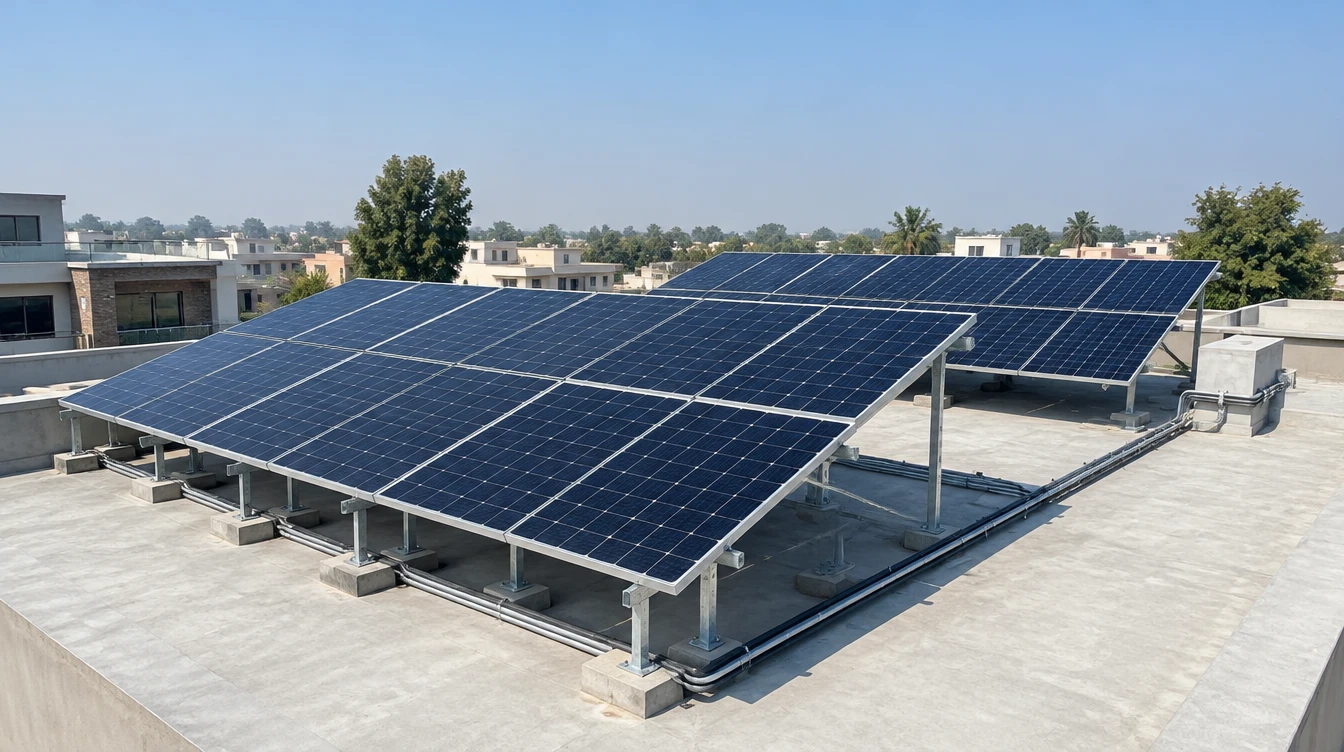
The short answer
A correctly sized solar system can cover 100% of a normal Pakistani household's electricity — lights, fans, fridge, pumps, TVs and inverter air conditioners — through the day, and through the night if you add storage. What decides it is four numbers: your monthly units, your roof area, your battery capacity, and how much winter and monsoon output loss you are willing to absorb.
Cutting the grid off completely is possible but rarely the most economical answer. For most homes in Faisalabad, Lahore and across Punjab, a hybrid system — solar, battery, grid kept as backup — delivers the same day-to-day independence for a much smaller investment.
Three ways a house can "run on solar"
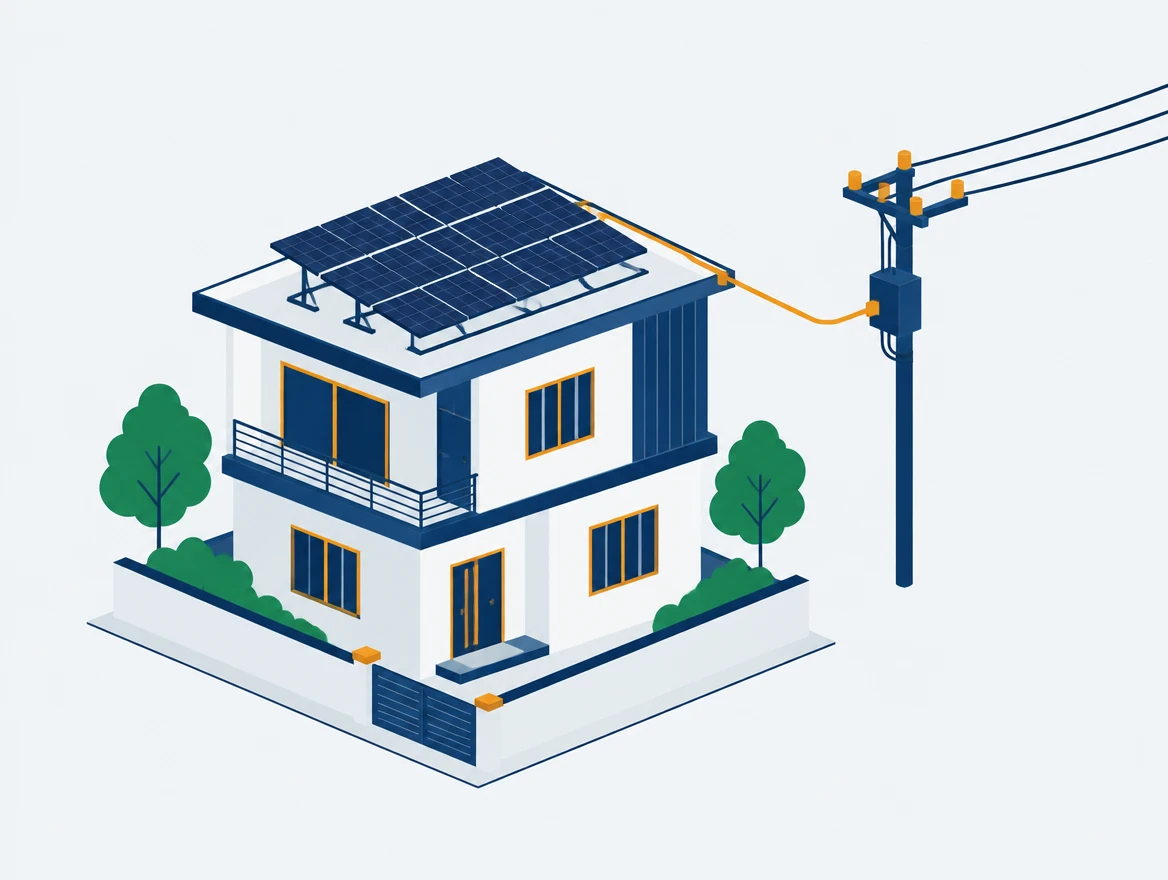
On-grid (no battery)
Solar runs the house in daylight; the grid covers nights and cloudy spells. Lowest cost per kilowatt, no storage to replace — but no backup during load shedding, and after net billing the surplus you export earns far less than it used to.
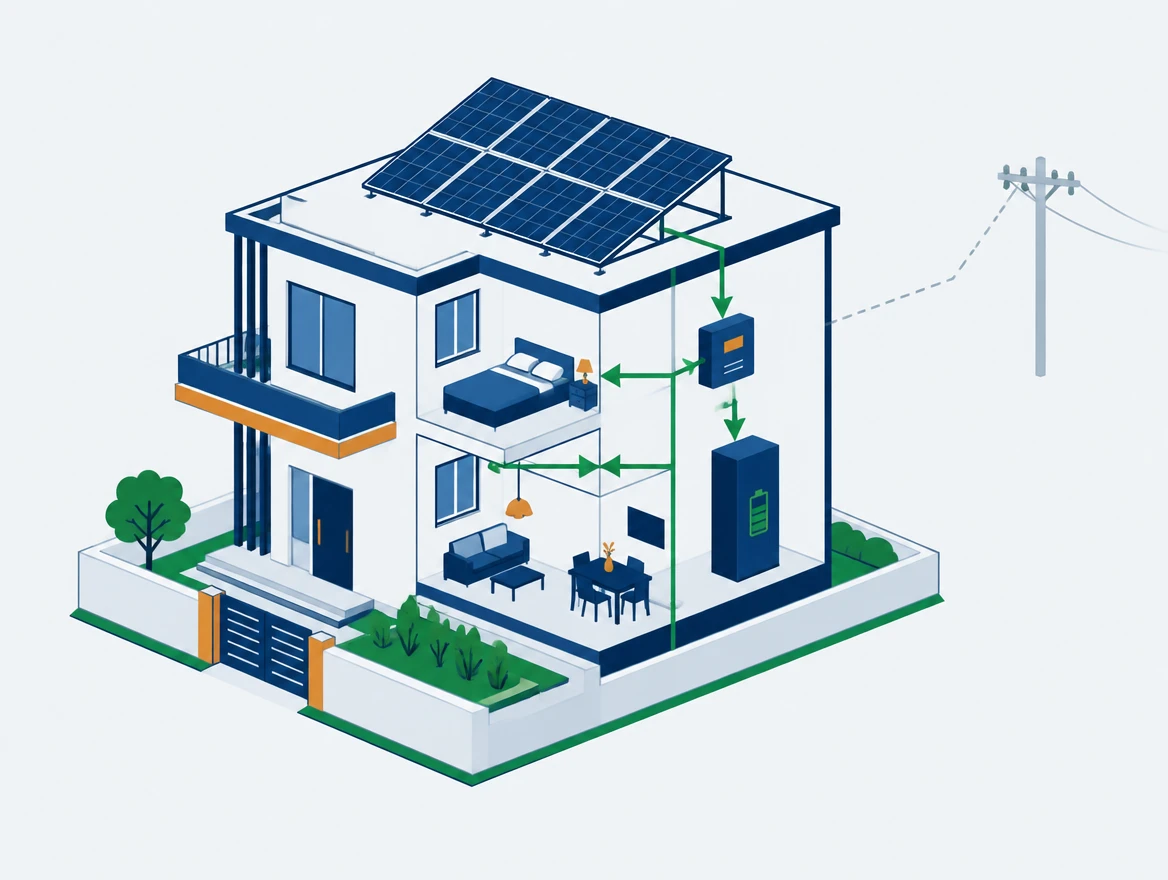
Hybrid (solar + battery + grid)
Solar runs the house by day and charges the battery; the battery carries the evening and night load; the grid sits behind it as insurance. This is what we recommend to most residential customers in 2026, because storing a unit is now worth far more than exporting it.
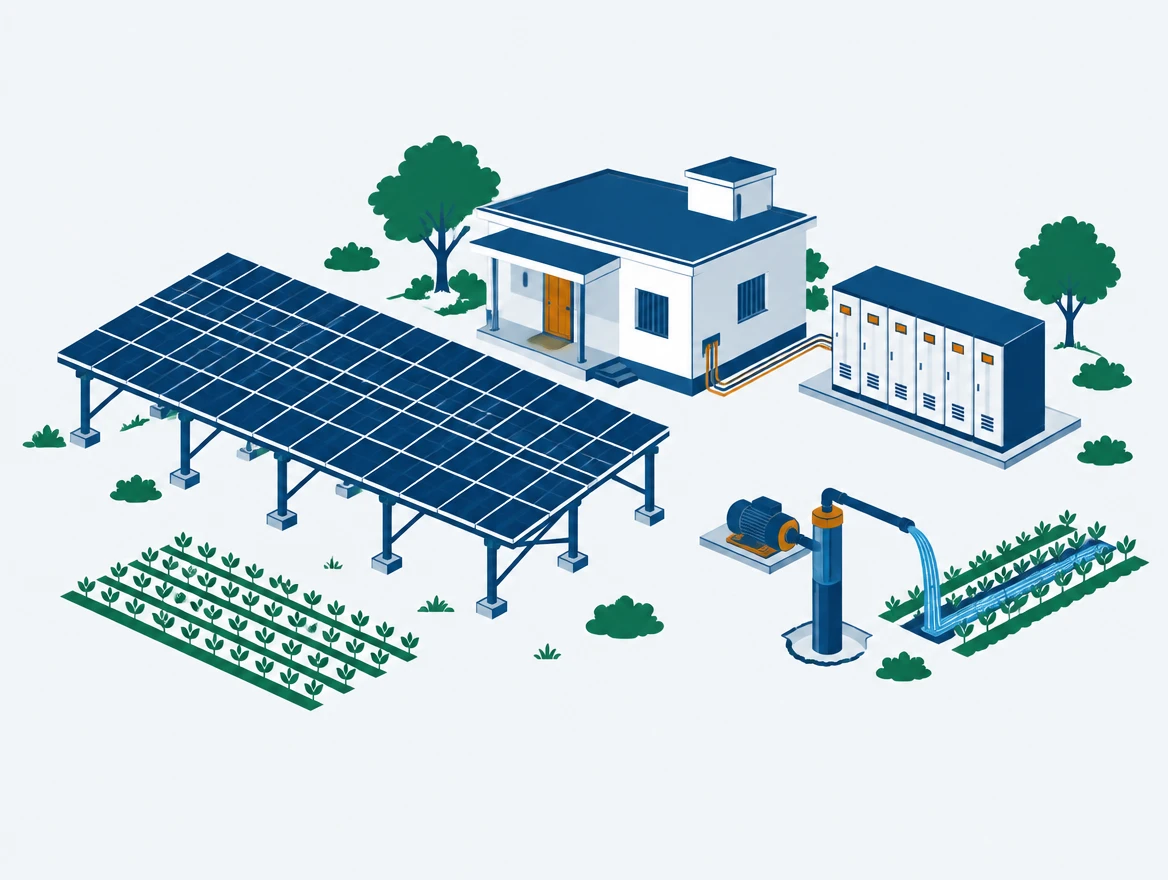
Full off-grid
No utility connection at all. Genuinely runs on solar alone, but the array and the battery bank must be sized for your worst week of the year, not your average — so it costs materially more. Right for farms, tube wells and remote sites; seldom the best value inside a city.
What a solar-powered home needs
Solar panels. The generating capacity. How many depends on your consumption and your usable roof area — at today's module sizes, roughly 10 to 11 panels per 6 kW.
Inverter. Converts panel DC into the AC your house uses. A hybrid inverter also manages the battery and switches between solar, storage and grid without you touching anything.
Battery. Optional on paper, decisive in practice. Storage is what lets solar carry your evening load and ride out load shedding.
Mounting structure and protections. Engineered racking, correctly sized cable, breakers, earthing and surge protection. This is the part that decides whether the system lasts twenty years or fails in year three.
Grid connection (unless off-grid). Either as plain backup, or with a bi-directional meter and a DISCO agreement if you intend to export.
How many units does a Pakistani house use — and what size system covers it?
Take the units (kWh) from twelve months of your electricity bills, not from one summer month. Across Punjab, one kilowatt of well-oriented, unshaded solar generates roughly 120 to 140 units a month averaged over the year. That gives a usable rule of thumb: system size in kW ≈ your monthly units ÷ 125.
Sizing ladder
Monthly units on your bill → system size that covers them
400–600 units
5–6 kW
700–900 units
7–8 kW
1,000–1,400 units
10–12 kW
1,800–2,500 units
15–20 kW
Indicative only. Roughly 10 to 11 modules per 6 kW at current panel sizes. Above 20 kW, and wherever shading, roof orientation or a heavy night load is involved, the system is engineered from a measured load profile rather than a rule of thumb.
Treat the ladder as a starting point for a conversation, not a quotation. Shading, roof orientation, phase, existing wiring and how much of your load runs after sunset all move the answer. Our smallest residential projects start at about 6 kW; above that, every system we design is sized from a real site survey and load analysis.
Do you need a battery in 2026?
For most homes, yes — and the reason is regulatory, not technical. On 9 February 2026 NEPRA's Prosumer Regulations replaced net metering with net billing. Exported units are no longer swapped one-for-one against imported units: exports are bought near the national average energy purchase price, currently in the region of Rs 8 to Rs 11 per unit, while everything you draw back from the grid is charged at your normal slab tariff, which can sit several times higher.
The practical consequence is simple. A surplus unit sold to the grid is worth a fraction of the same unit stored in your own battery and used at 9 pm. Oversizing an array to farm export credits no longer pays — and the 2026 rules cap system capacity at your sanctioned load anyway. Sizing the array to your consumption and adding storage is what works now. If your net metering agreement predates 9 February 2026, your existing terms continue until that agreement expires — ask us before you extend anything on a grandfathered connection, because increasing your load can end that protection.
Net billing, 2026
What one surplus unit is worth to you
Rs 8–11
Exported to the grid, paid at the buyback rate
Rs 37–55
Stored in your battery and used at night, avoiding a slab-tariff import
Buyback tracks the national average energy purchase price and moves; residential slab tariffs vary by DISCO and consumption band. Ask us for the rates in force the week you apply.
Battery capacity should be set by your night load, not by a slogan. Count what actually runs after dark — fans, lights, fridge, one or two bedroom ACs — and size the bank around that, with headroom for the depth of discharge the chemistry allows.
Does solar output drop in winter and monsoon?
Yes, and this is the honest limit on running a house on solar alone in Punjab. Output peaks from March to June, then dips through monsoon cloud in July and August. The real constraint is the December–January fog belt over Faisalabad, Lahore and central Punjab, where daily generation can fall well below the annual average for days at a stretch.
Seasonal output
Typical monthly generation across Punjab, as a share of the best month
Jan
Feb
Mar
Apr
May
Jun
Jul
Aug
Sep
Oct
Nov
Dec
Peak months
Normal
Fog and low-sun months
Indicative shape of the year for central Punjab, not a guarantee for your site. Actual output depends on tilt, orientation, shading, soiling and the season's weather.
A hybrid system absorbs that by leaning on the grid for a few weeks a year. A true off-grid system has to absorb it with extra panels and extra battery, which is exactly why full independence costs more than most people expect. Heating load makes it worse: electric geysers and heaters are the single most common reason a winter system comes up short.
Can you actually go fully off-grid?
Technically, yes, and we build these systems. Expect a larger array than your consumption alone would suggest, a battery bank sized for consecutive low-generation days, and a disciplined look at your heavy loads. Farms, tube wells, remote sites and buildings with no reliable utility connection are where off-grid genuinely wins. Inside a city with a working connection, the same money usually buys a better hybrid system.
In short
A house in Pakistan can run on solar power alone. Whether it should run without the grid is a separate question, and the answer comes out of your twelve-month unit history, your roof, your night load and your winter tolerance. Get those four right and the system pays for itself quietly for two decades. Get them wrong and you have bought either an oversized array that exports cheap units or an undersized one that still leaves a bill.
Send us a recent electricity bill and we will tell you the honest size for your house — site surveys are normally free, across Faisalabad, Lahore and Punjab.