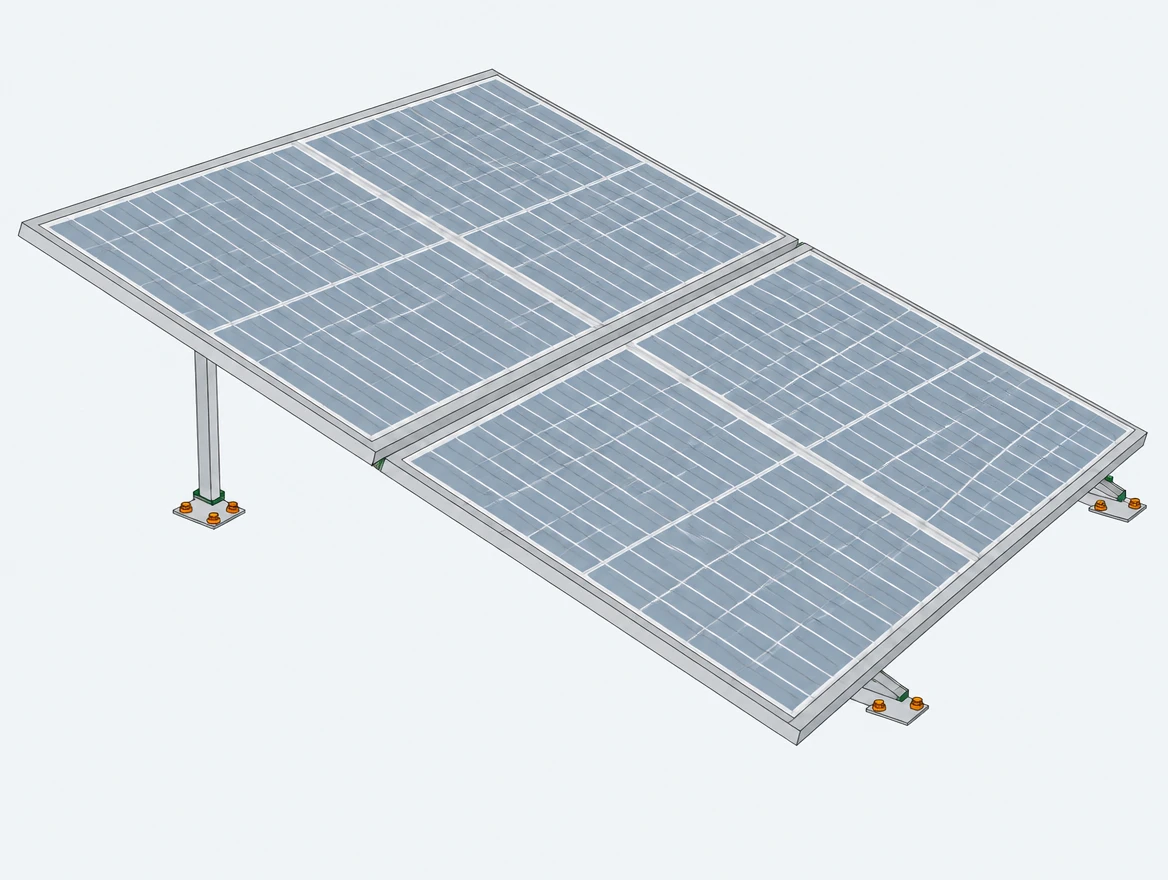
L2 structure
Two solar plates per structure. Low cost, strong, and quick to install — the standard unit where the roof or ground is broken up, or where a system will be extended later.
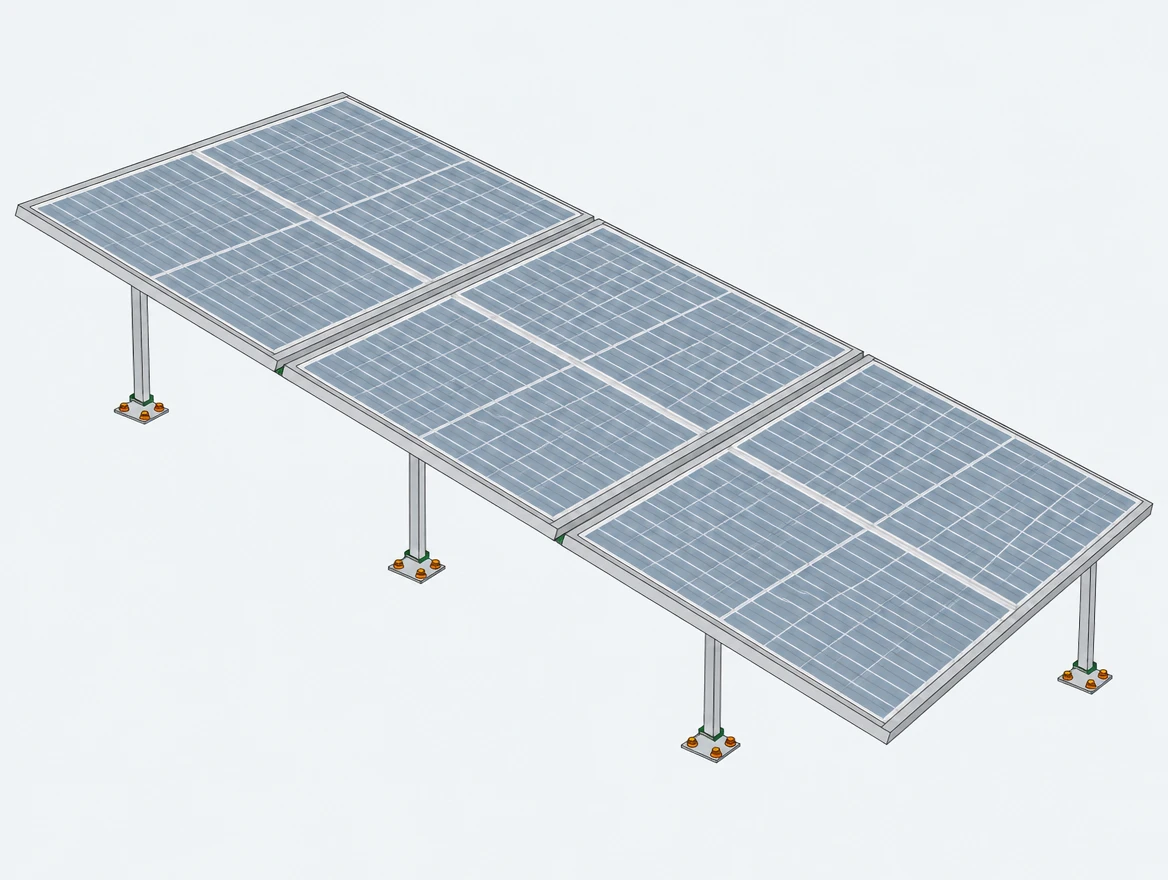
L3 structure
Three solar plates per structure. Same low cost and strength as the L2 with fewer feet per kilowatt — the common choice on clear rooftops with an uninterrupted run.
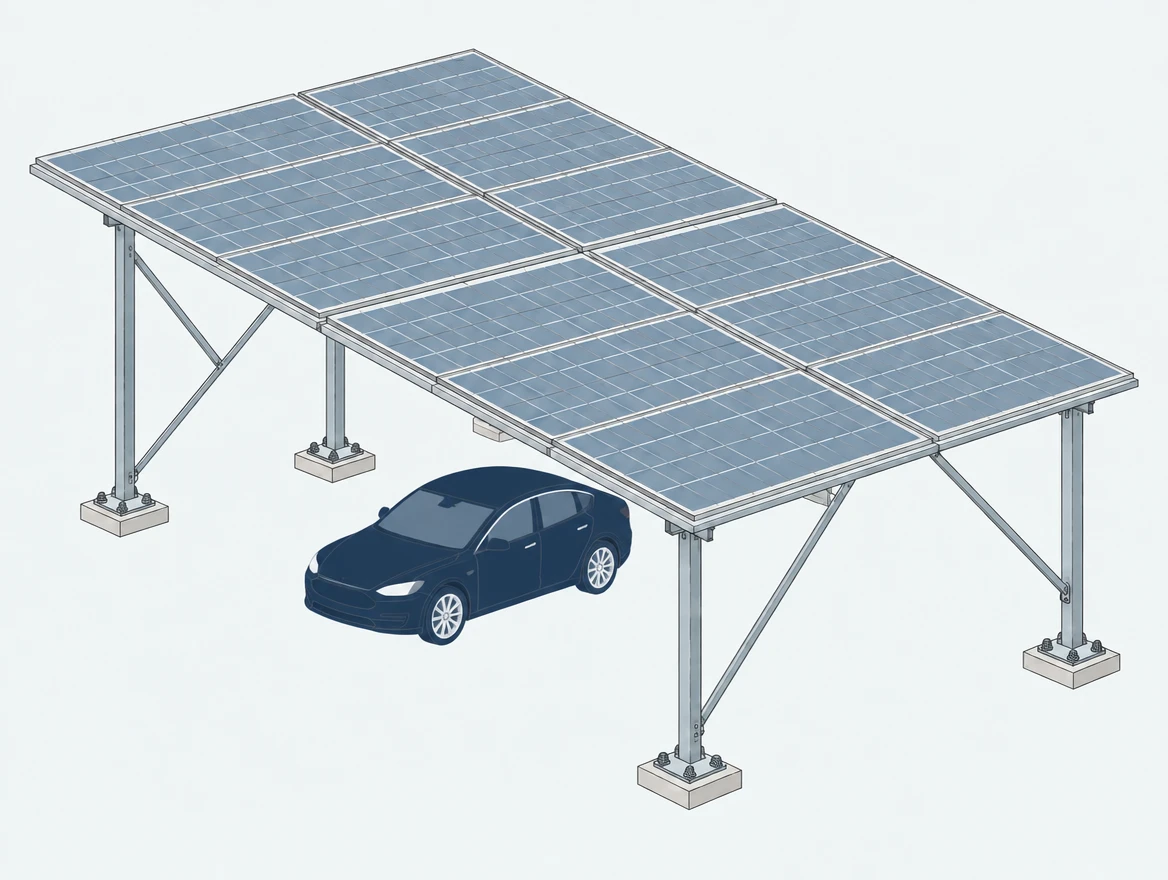
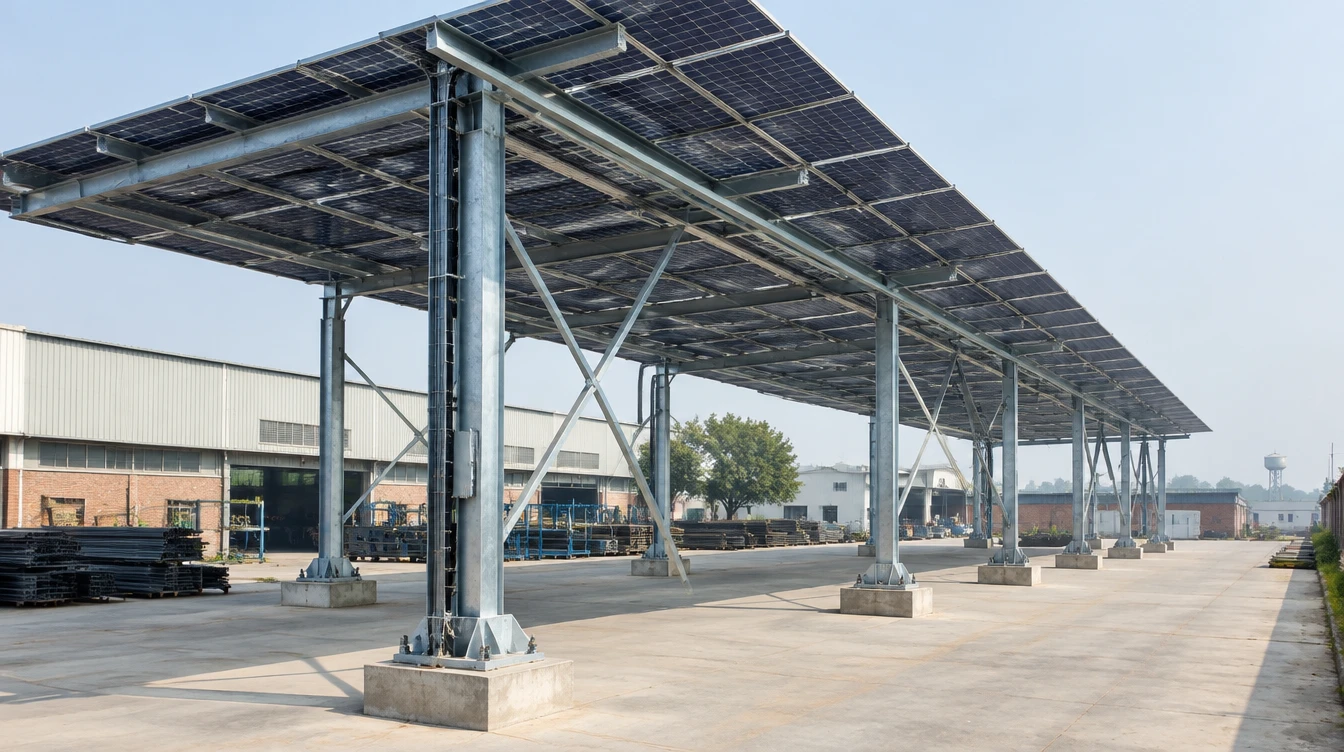
Customised elevated structure
Any number of plates, because the structure is fabricated to the site. Costs more than an L2 or L3, and earns it back by wasting almost no area — and by leaving the ground underneath usable.
Rules for structure selection
If the client has plenty of space and nothing casting a shadow across it, we recommend L2 and L3. They are low cost and they are strong — there is no reason to spend more.
Their one drawback is spacing. After installing one L2 or L3, a wide gap has to be left before the next one, or the first row shades the row behind it. That gap is area you cannot use, so on a tight site the cheap structure quietly costs you kilowatts.
An elevated structure has no such penalty. Because it is customised to the site, nothing needs to be left between panels except the gaps for wind-pressure release. It costs more per kilowatt to fabricate and earns that back by fitting more capacity into the same space, and by leaving the ground underneath usable.
Whichever structure is chosen, we design it so that every panel stays reachable for washing. Dust is a real loss in Punjab, and an array you cannot clean is an array that quietly under-performs — so access and walking space are worked into the layout from the start, not left to be solved after handover.
Selection rules
How we choose between L2, L3 and elevated racking
Structure
Plates each
Cost
Space between rows
We recommend it when
L2
2
Low
Wide gap needed
You have plenty of space and no shadow. Low cost and strong, so it is our first recommendation wherever the area allows it.
L3
3
Low
Wide gap needed
Same as the L2, with fewer feet per kilowatt — the better of the two wherever you have a clear, uninterrupted run.
Customised elevated
Any
Higher
Wind-release gaps only
Space is tight, or the ground underneath has to stay usable. Because it is fabricated to the site, almost no area is given up to row spacing.
The rule in one line: where there is open, unshaded space, L2 and L3 give you the most generation for the money; where space is limited, an elevated structure fits more kilowatts into the same area and pays for its extra cost in what it lets you install.
In short
Structure selection is not a catalogue decision. Open, unshaded space makes L2 and L3 the best value; a tight site makes a customised elevated structure the cheaper answer in the end, because it puts more kilowatts on the same ground. We settle it from the site survey, then design and fabricate to that site — with washing access built into the layout.